Space Planning in Interior Design
Space planning in interior design is the strategic backbone of any successful renovation or build. It transcends mere decoration, focusing instead on the architectural relationship between a room’s dimensions and the human experience. By analyzing interior design styles alongside physical constraints, designers create a master plan that dictates how a person enters, moves through, and interacts with a room. This phase ensures that aesthetic choices like furniture and décor are supported by a logical, functional foundation, preventing a space from feeling cramped, cluttered, or unusable.Importance of Space Planning in Interior Design
The importance of space planning in interior design cannot be overstated, as it directly impacts both comfort and property value. A well-planned room optimizes space planning basics, such as natural light and ventilation, while eliminating dead zones that waste square footage. Beyond aesthetics, it addresses ergonomic needs, ensuring that pathways are clear and furniture is scaled correctly. By prioritizing function first, you avoid costly mistakes like purchasing oversized pieces and create a harmonious environment where the layout supports your daily rituals rather than hindering them.Space Planning Process
The space planning process is a methodical journey from raw measurements to a finished layout. It begins with a detailed needs assessment to identify how the area will be used. Designers then move into “bubble orbiting,” a technique used to map out activity zones without getting bogged down in furniture specifics. Once the zones are established, a scaled floor plan is created, incorporating interior design styles to guide the selection of “anchor” pieces. This rigorous workflow ensures that every design decision is intentional, maximizing efficiency while maintaining a beautiful, cohesive aesthetic.Principles of Space Planning in Interior Design
To master space planning basics, one must adhere to core principles like balance, proportion, and circulation. These principles of space planning in interior design act as the rules of engagement for a room. For instance, the principle of “proportionality” ensures a tiny studio isn’t overwhelmed by a sectional sofa, while “circulation” keeps pathways open and intuitive. By balancing “positive space” (furniture) with “negative space” (open areas), designers achieve a sense of equilibrium that feels professional and intentional, regardless of the specific interior design styles being applied.
Have you ever walked into a room that felt “off”? Perhaps the sofa was too large for the walls, or you felt like you were navigating an obstacle course just to reach the window. That feeling is usually the result of poor space planning.
In interior design, space planning is the fundamental framework that dictates how a room functions, feels, and flows. Whether you’re a DIY enthusiast or a professional interior designer, mastering this phase is the difference between a beautiful room and a livable one.
What is Space Planning in Interior Design?
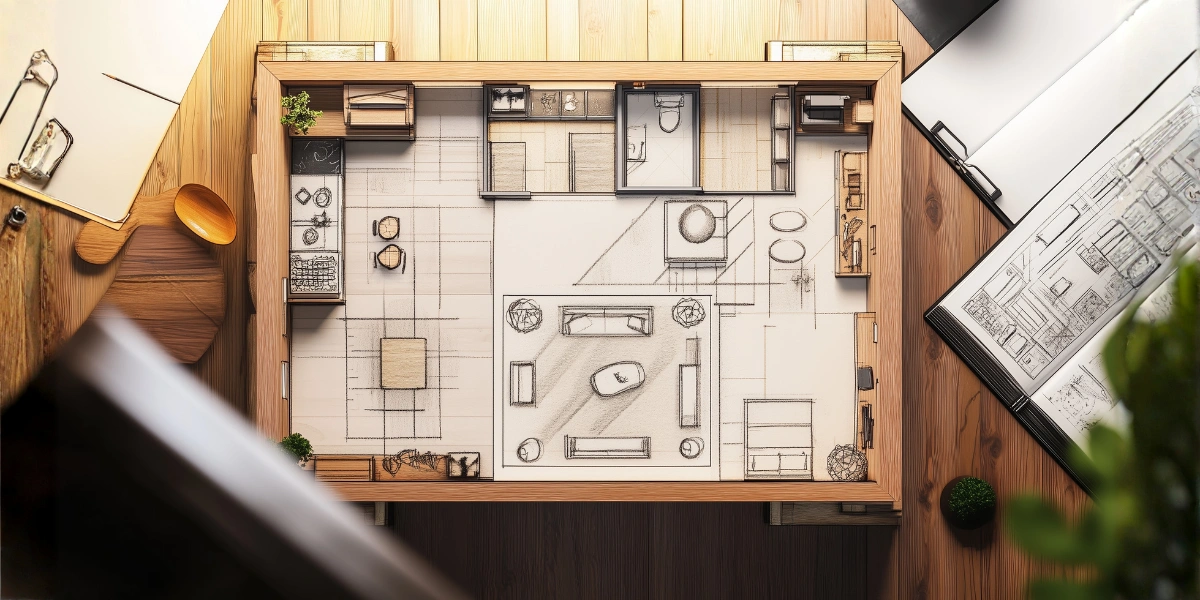
Space planning is the process of analyzing how a space will be used and organizing furniture, circulation paths, and zones to maximize efficiency and comfort. It happens during the initial design phase, before a single piece of furniture is purchased.
Importance Of Space Planning In Interior Design
1. Functionality:
Ensuring the room serves its intended purpose.
Ensuring the room serves its intended purpose.
2. Circulation:
Creating clear pathways for movement.
Creating clear pathways for movement.
3. Balance:
Distributing visual weight and physical objects evenly.
Distributing visual weight and physical objects evenly.
4. Compliance:
Meeting safety codes and accessibility standards.
Meeting safety codes and accessibility standards.
Why Space Planning Matters?
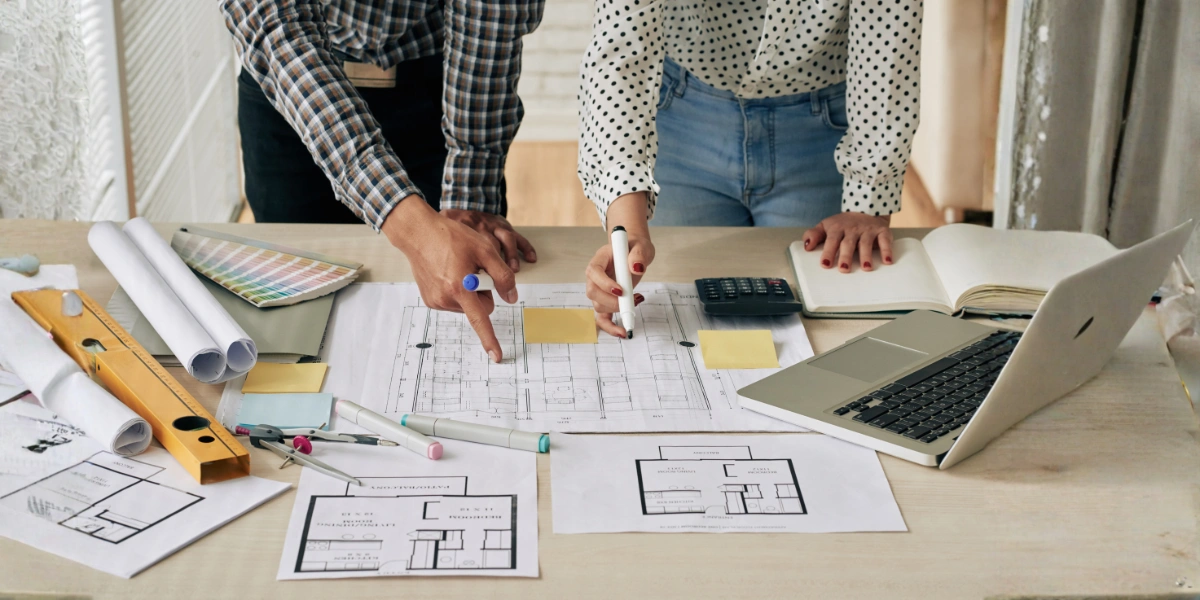
Without a plan, even the most expensive furniture can look cluttered or misplaced. Effective space planning:
1. Prevents Costly Mistakes:
You won’t buy a king-sized bed for a room that only fits a queen.
You won’t buy a king-sized bed for a room that only fits a queen.
2. Optimizes Small Spaces:
It makes tiny apartments feel expansive through clever zoning.
It makes tiny apartments feel expansive through clever zoning.
3. Enhances Well-being:
A well-organized space reduces stress and physical strain.
A well-organized space reduces stress and physical strain.
The 5 Essential Steps of the Space Planning Process
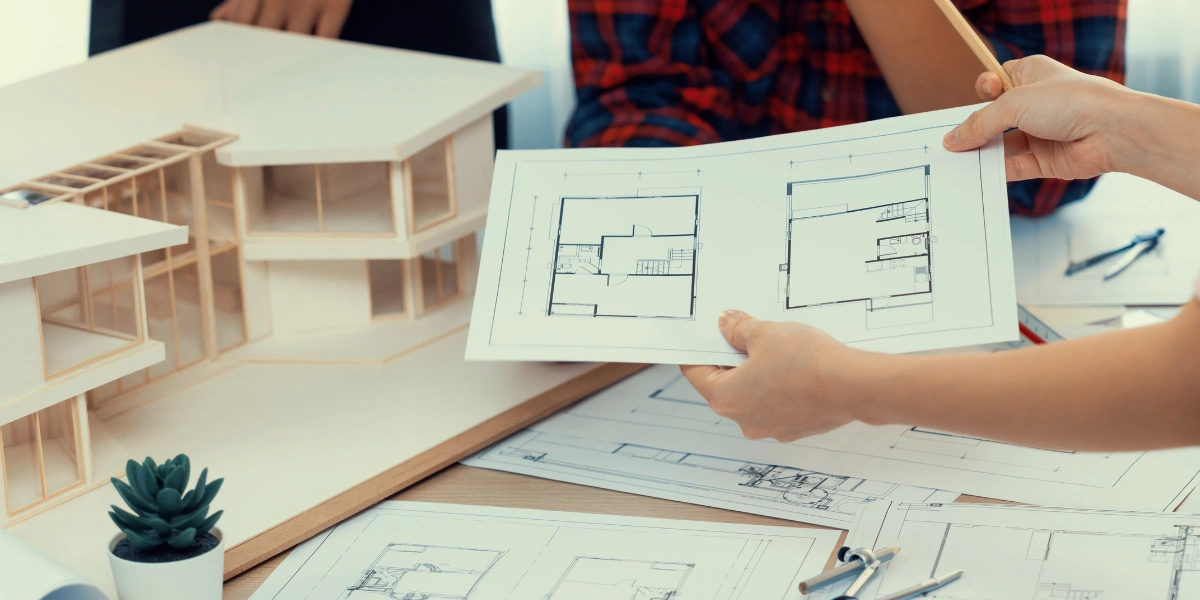
To get your design right, follow this sequential workflow.
1. Conduct a Needs Assessment
Before drawing, ask: What is the primary activity in this room? A living room used for hosting large parties requires a different layout than one used primarily for cozy movie nights. List your “Must-Haves” vs. “Nice-to-Haves.”
2. Take Accurate Measurements
In design, every inch counts. Use a steel tape measure to record:
1. Wall lengths and ceiling heights.
2. Window and door placements (including which way they swing).
3. Locations of electrical outlets, radiators, and vents.
3. Identify the Focal Point
Every room needs an anchor. It could be a fireplace, a large window with a view, or a gallery wall. Arrange your primary furniture to complement, rather than ignore, this point.
4. Map the "Traffic Flow"
Traffic flow (or circulation) is the path people take to move through a room.
1. Major paths should be at least 36 inches (90 cm) wide.
2. Minor paths (like moving around a coffee table) should be at least 18 inches (45 cm) wide.
5. Create a Furniture Layout
Start with the largest pieces first. In a bedroom, place the bed; in a dining room, the table. Once the “anchors” are set, fill in the secondary pieces like side tables and lamps.
Critical Space Planning Dimensions
To make your home feel professional, use these industry-standard measurements:
Item | Standard Clearance/Height | Why it Matters |
Coffee Table to Sofa | 16–18 inches | Enough room for legs, close enough to reach a drink. |
Dining Chair Pull-out | 36 inches | Allows guests to sit and stand without hitting a wall. |
TV Viewing Distance | 1.5x to 2.5x the screen diagonal | Prevents eye strain and optimizes resolution. |
Kitchen Work Triangle | 4 to 9 feet between appliances | Minimizes walking while cooking. |
Principles Of Space Planning In Interior Design
Effective space planning is the strategic DNA of interior design, balancing aesthetic vision with architectural reality. By applying core principles such as circulation, zoning, and proportions designers transform raw square footage into intuitive, high-functioning environments. It is the science of ensuring every inch serves a purpose while maintaining a seamless flow.
The Rule of Proportions
The scale of your furniture must match the scale of the room. A common mistake is using “apartment-sized” furniture in a high-ceilinged great room, which makes the space feel cold and cavernous.
Negative Space (White Space)
In design, what you don’t fill is just as important as what you do. Negative space allows the eye to rest and prevents the room from feeling claustrophobic. Aim for a 60:40 ratio 60% furniture/decor and 40% open space.
The Kitchen Work Triangle
If you are planning a kitchen, the “Work Triangle” is the gold standard. It connects the Sink, Refrigerator, and Stove. The sum of the three legs of the triangle should be between 13 and 26 feet.
Space Planning for Different Room Types
To master space planning basics, one must recognize that every room possesses a unique functional DNA. While interior design styles from Industrial to Mid-Century Modern dictate the visual “flavor,” space planning provides the essential structural logic. This phase involves tailoring layouts to specific human behaviors, whether it’s optimizing the “Work Triangle” in a kitchen or ensuring conversational intimacy in a lounge. By adapting universal spatial principles to the distinct requirements of bedrooms, offices, and living areas, you create a home that feels both cohesive in style and effortless in daily utility.
The Living Room: The Social Hub
Focus on conversation “U” or “L” shapes. Ensure that everyone seated can easily reach a surface to set down a glass. If the room is multi-functional (e.g., a living/office combo), use area rugs to define the different “zones.”
The Bedroom: The Sanctuary
The bed is the king. Ideally, place the headboard against the main wall with walking space on both sides. Avoid placing the bed directly under a window if possible, as it can create drafts and light leaks.
The Home Office: Productivity First
Position your desk to manage glare on your computer screen. If you have the luxury of space, the “Executive Position” (facing the door) provides a sense of security and command.
Common Space Planning Mistakes to Avoid
1. Pushing All Furniture Against Walls:
This often creates an awkward “dance floor” in the middle. Try pulling furniture inward to create intimate groupings.
This often creates an awkward “dance floor” in the middle. Try pulling furniture inward to create intimate groupings.
2. Ignoring Lighting:
Plan where your lamps will go while you plan the furniture. You don’t want a reading chair that is 10 feet away from the nearest outlet.
Plan where your lamps will go while you plan the furniture. You don’t want a reading chair that is 10 feet away from the nearest outlet.
3. Overcrowding:
If you have to turn sideways to walk through a room, you have too much furniture.
If you have to turn sideways to walk through a room, you have too much furniture.
4. Blocking Natural Light:
Never place tall cabinets or heavy drapes where they obstruct the flow of sunlight.
Never place tall cabinets or heavy drapes where they obstruct the flow of sunlight.
Digital Tools to Help You Plan
You don’t need to be an architect to create a floor plan. Here are a few accessible tools:
1. Floorplanner:
Great for quick 2D and 3D mockups.
Great for quick 2D and 3D mockups.
2. RoomSketcher:
Ideal for visualizing furniture styles.
Ideal for visualizing furniture styles.
3. SketchUp:
For those who want more control and professional-grade precision.
For those who want more control and professional-grade precision.
Summary Checklist for Your Next Project
1. Measure the room twice.
2. Identify the primary function.
3. Mark the focal point.
4. Trace the walking paths (clearance check).
5. Arrange “Anchor” furniture.
6. Add secondary pieces and lighting.
7. Test the flow (walk through the room).
Effective space planning is a blend of logic and creativity. By focusing on how you move and live, rather than just how things look, you’ll create a home that feels as good as it looks.
FAQ's
Space planning is the fundamental stage of the interior design process that involves analyzing how a room’s floor space will be used. It is a technical exercise where a designer maps out zones for specific activities, defines circulation patterns (how people walk through a room), and determines the best placement for furniture and equipment. The goal is to ensure the environment is both functional and comfortable before any aesthetic decisions like paint colors or fabrics are made.
Space planning interior design services are professional consultations where an expert provides technical drawings, such as 2D floor plans and 3D spatial models, tailored to a client’s specific needs. These services include evaluating structural constraints, optimizing natural light, and ensuring compliance with building codes and accessibility standards. For commercial clients, these services focus on maximizing employee productivity and “flow,” while for residential projects, the focus is on enhancing the “livability” and efficiency of the home.
Space planning matters because it prevents costly mistakes and ensures a room actually works for its inhabitants. Without a plan, you might purchase furniture that is too large, block essential walkways, or fail to place power outlets where they are needed. Good space planning creates a sense of balance and proportion, making even small rooms feel spacious and intuitive. It is the “skeleton” of a design that supports all the visual beauty added later.
The Work Triangle is a classic design principle used to create an efficient kitchen layout. It maps the distance between the three most used areas: the sink, the refrigerator, and the stove. For optimal efficiency, the sum of the three sides of the triangle should be between 12 and 26 feet, ensuring the cook has enough room to move without the stations being inconveniently far apart.
Circulation paths are the invisible “roads” people take to move from one point to another in a space. In effective space planning, these paths are kept clear usually requiring a minimum of 36 inches for a main walkway to prevent a room from feeling cramped. Proper planning ensures that you don’t have to walk around a sofa or a coffee table awkwardly to reach a door or a window.
Zoning is the technique of using furniture, rugs, or lighting to define separate functional areas within a single large room. For example, in a modern open-plan living area, a designer might use a large area rug to “zone” the seating area and a kitchen island to “zone” the dining space. This provides a sense of structure and purpose to a large area without the need for permanent walls.