

Villa interior design in Dubai starts before anyone picks a sofa. It starts with a glass wall that faces west, a driveway that holds the afternoon heat, and a family that wants the house to feel cool, calm and a little grand when guests walk in. Get those basics wrong and no amount of marble will fix the rooms.
Most Dubai villas arrive as a handsome shell: high ceilings, big windows, a double-height foyer, a garden at the back. What they lack is a point of view. The interior has to decide how the family eats, entertains, studies and sleeps, and then dress that decision in materials that hold up to strong sun, air-conditioning and daily life.
This guide looks at the inside of the house only: climate and light, layout, materials, craft, lighting, private rooms and the way a designer works with a family. For the architecture side, there is a separate read on villa design in Dubai.
At Sumessh Menon & Associates, the Mumbai studio founded by Sumessh Menon, villas in Dubai sit beside projects in Mumbai, Goa, Bengaluru, Galle and Johannesburg, and the studio has designed a private villa in Jumeirah Islands and a five-bedroom villa in Arabian Ranches. Some of what follows comes straight from those two houses.
1. Villa Interior Design in Dubai Begins with Heat and Light
The first job is to read the house like a weather map. Which rooms face the sun at three in the afternoon, which stay in shade, and where does the glare land on the floor? A designer answers these before drawing a single sofa.
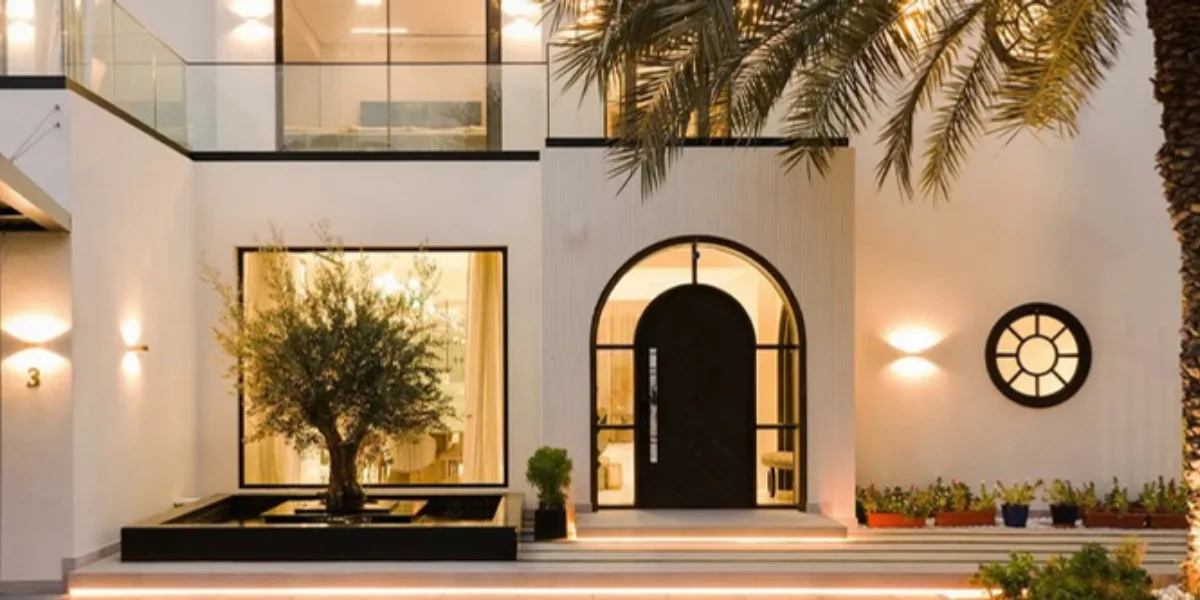
Strong light is the great gift of a Dubai villa and its biggest nuisance. A living room with a full-height window looks wonderful at breakfast. By late afternoon it can turn into a glasshouse. So most villas need two layers: something soft at the window, such as sheer curtains or roman blinds in a natural fabric, and something heavier behind it for the hottest hours.
Let the light decide the room use
Cool, shaded rooms suit reading corners, home offices and children’s study areas. The bright rooms are better for formal living and dining, where people come and go in the evening. It sounds obvious. Plenty of villas do it the other way round.
The same thinking applies to colour. Pale stone floors and creamy walls bounce light around and keep a big room from feeling heavy. Deep colours work best in smaller, shaded spaces, like a study or a guest powder room. The principles in the studio’s note on natural light in villa interiors carry over well to Dubai, with one change: here the job is often to soften the light, not to invite more of it.
A few quick checks before any finish is chosen:
- Stand in each main room at different hours and note where the sun lands.
- Check which windows can take a curtain track and which need a built-in blind pocket.
- Look at the view. A garden or pool view is worth framing; a neighbour’s wall is worth hiding.
- Ask how the family really uses each room on a weekday, not on festival day.
2. Plan the Layout Around How the Family Lives
A villa plan should follow daily habits, with the formal rooms treated as the exception. The right layout starts with who lives there, how often guests come and where the family spends most evenings.
Large villas can swallow a family. Five bedrooms, a formal majlis-style sitting room, a family lounge, a kitchen, a maid’s room, a study: the house is full of doors and the people are in different corners. A good plan gives each group its own territory and one or two places where everyone meets.
Formal and family rooms should not compete
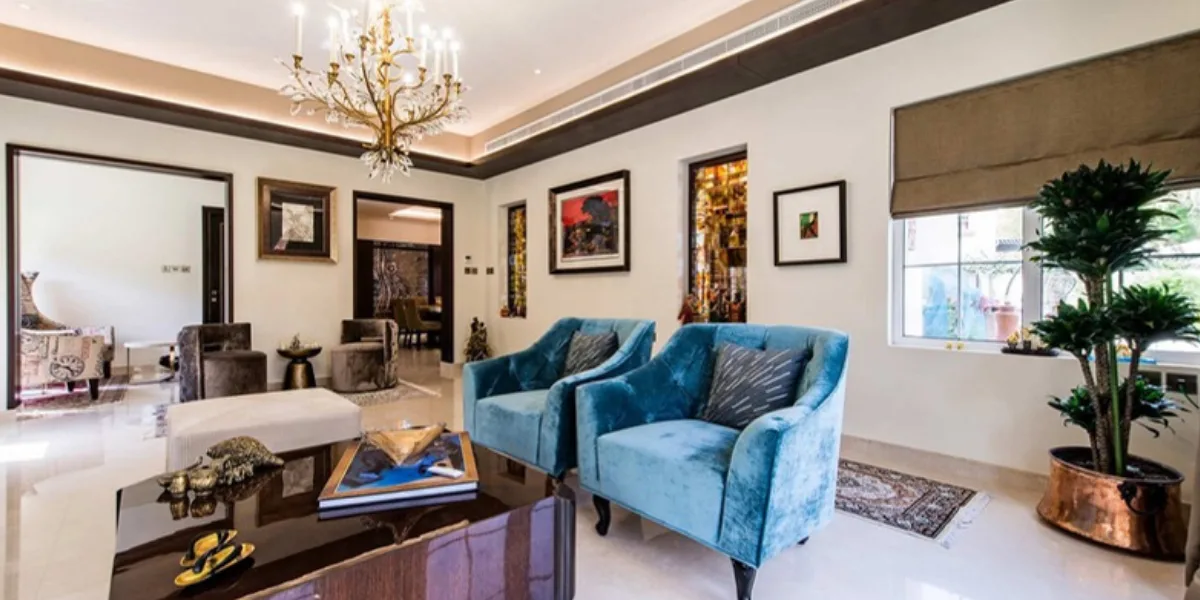
Many families want one room for receiving guests and another for living. Keep them apart. The formal room can be dressed for show, with the better rugs and the statement chandelier. The family lounge should be the room with comfortable seats, a television that is not an embarrassment and a view of the garden.
The double-height foyer is where the villa shows off. It does not need to be crowded. One strong feature does more than five: a staircase, a carved door, a large piece of art. Anything else usually gets in the way.
Do not forget the back of house
The kitchen, the pantry, the service entry and the storage rooms decide whether the villa runs smoothly. They are rarely photographed and always used. In a Dubai home with staff and frequent entertaining, a separate service route is worth the floor area.
Questions worth answering before the plan is final:
- How many people sleep in the house on a normal week, and on a holiday week?
- Does the family entertain in large groups or in small, long dinners?
- Who needs a private retreat, and who needs to be near the kitchen?
- Where will the shoes, the bags and the sports kit go when people come in from the car?
FAQs: Dubai Villa Climate and Layout
1. How do you keep a Dubai villa interior cool without making it dark?
Use layers. Sheer curtains soften the glare, blinds or heavier drapes take over in the hottest hours, and pale floors and walls keep the room bright. Planning which rooms get the strongest sun matters more than any single product.
2. Which rooms of a villa should face the garden?
The family lounge and the main dining area usually benefit most. They are used for the longest stretches of the day, so the view pays back. Bedrooms can take the quieter side.
3. Is a formal sitting room still worth having in a Dubai villa?
Yes, if the family entertains in that style. If not, a smaller formal room plus a generous family lounge works better than one huge room that sits empty.
4. How does Sumessh Menon & Associates plan the layout of a villa in Dubai?
The studio starts with how the family lives, then places formal rooms, private suites and service areas around that. At its Arabian Ranches villa, the plan holds social areas, a kitchen, a study and five bedrooms, each with its own character.
3. Materials for Villa Interior Design in Dubai That Last
Choose materials that are happy in strong sun, cool interiors and constant foot traffic. Marble and stone suit the floors and feature walls. Wood suits doors, panelling and furniture. Metal and glass add detail where it counts.
Marble is beautiful and it can stain. A white marble dining floor looks wonderful the day it is polished and less wonderful after the first red wine. That is not a reason to avoid it. It is a reason to put the most delicate stone where fewer people walk, and a harder, more forgiving one in the kitchen and family lounge.
Marble and Stone: Where They Work Best
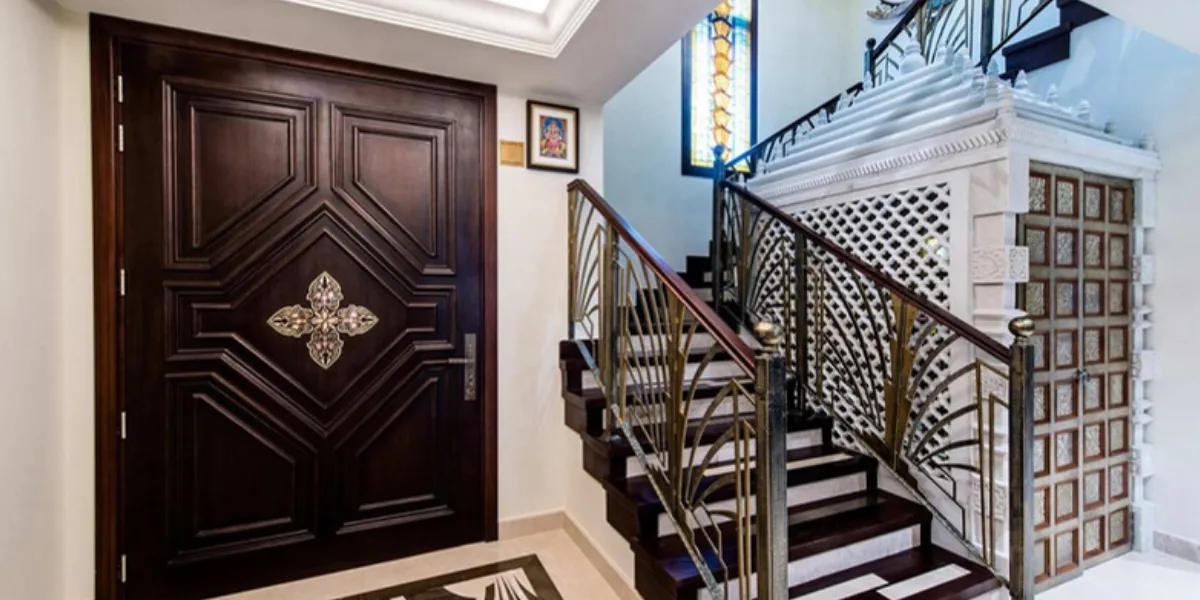
A double-height foyer with a marble floor sets the tone as soon as the door opens. The Arabian Ranches villa designed by the studio has exactly this: Italian marble in the foyer and washrooms, with an Art Deco entrance leading in. At the Jumeirah Islands villa, the grand central staircase is cut from panda marble, and the bathrooms are clad in rare marble, including a powder room with intricate mosaic walls.
Those are strong choices, and they are strong because they are limited. A staircase in a showpiece stone, with calmer finishes around it, reads as confident. Every surface in a showpiece stone reads as a showroom.
The Staircase as the Villa’s Centrepiece
In a villa, the staircase is furniture the size of a room. It shapes how light falls in the foyer and how people move between floors. Metal screens, carved wood and stone steps each give a different feel. Pick one hero material and let the others support it.
Wood, metal and glass
Wood warms up a marble house. Carved or panelled doors, a timber ceiling detail or a rich walnut cabinet bring in softness. Metal latticework and stained glass catch the light and break up large walls. Keep the metal finishes consistent across the house, so a brass handle in one room does not argue with a nickel one in the next.
Real wood in a Dubai villa has to live with air-conditioning that dries the air. Good joinery, properly seasoned timber and a sensible finish matter far more than the species name on the drawing.
4. Blend Indian Craft with Dubai Living
Indian craft sits very comfortably in a Dubai villa. Carved stone, handmade metalwork and bespoke furniture add a layer of detail that off-the-shelf pieces can’t match, and many Dubai families have roots or tastes that connect with it.
The Jumeirah Islands villa is described by the studio as a blend of Indian heritage and contemporary design, with bespoke materials and handcrafted furniture. Pieces are handpicked from India or from established Dubai brands, with artisanal decor added on top. At the Arabian Ranches villa, a stairwell temple in carved stone was made in Jaipur and shipped to Dubai. Its geometric carvings, pyramidal roof and Tree of Life motif turn a stairwell into a quiet destination.
This kind of detail takes planning. Craft pieces have to be measured against the real structure, ordered early and checked on arrival. A carved panel that is two centimetres too wide is a very expensive lesson.
Mix, but edit
A villa can carry Art Deco formal rooms, classical private suites and a modern children’s wing, as the Arabian Ranches house does. The trick is repetition. Repeat one colour, one metal or one pattern in every wing, and the changes in style feel intentional. For a deeper look at how colours hold a villa together, read the studio’s guide to villa and apartment colour palettes.
FAQs: Materials and Craft
1. Which flooring suits a Dubai villa best?
Marble and natural stone are the classic choices. They stay cool underfoot and take heavy use. Use a harder stone in busy rooms and keep the most delicate one for show spaces.
2. Can real wood be used in a Dubai villa?
Yes, with good joinery and a sound finish. Dry, air-conditioned air is hard on poor timber, so quality of work matters more than the type of wood.
3. Is Art Deco a good style for a villa?
It can be, especially in an entrance, a dining room or a foyer where shape and shine are welcome. Used everywhere, it tires. See the overview of Art Deco for how the style began.
4. Has Sumessh Menon & Associates brought Indian craft into a Dubai villa?
Yes. At its Arabian Ranches villa, a carved stone stairwell temple was made in Jaipur and shipped to Dubai. At Jumeirah Islands, furniture and decor were sourced from India and from Dubai brands.
5. Light the Villa in Layers
Lighting a villa works best in layers: soft general light, focused light where tasks happen, and accent light for art and texture. One bright ceiling fitting in a large room flattens everything below it.
Large rooms need several light sources at different heights. A chandelier in the foyer, cove lighting in the ceiling, a pair of table lamps by the sofa and a picture light over a painting give a room depth without anyone noticing the effort. Dimmers on every circuit let the same room work for breakfast and for a late dinner.
Outdoors, the same thinking holds. At the Arabian Ranches villa, the gardens, water features and outdoor lounging zones are lit in layers, so the garden carries on being part of the house after dark. For deeper reading, the studio’s guide to luxury lighting schemes for villa interiors goes room by room.
Warm, not yellow
Choose a warm white that flatters skin and stone, and keep the colour temperature the same across the house. Mixing cool and warm bulbs in one room is the quickest way to make an expensive interior look cheap.
6. Make Bedrooms, Bathrooms and Children’s Rooms Personal
The private rooms are where a villa becomes a home. Bedrooms need calm, quiet and good storage. Bathrooms can take more drama than most people expect. Children’s rooms should grow with the child.
The Arabian Ranches villa shows how far personal can go: a guest suite with a four-poster bed, a children’s room with automotive-themed wall coverings, a vintage-themed guest bathroom and a children’s washroom in blue and white scale tiles. None of it feels random, because each room has one idea and keeps to it.
Bathrooms deserve real attention
A powder room is small, so one bold choice, such as a mosaic wall or a dramatic stone, makes it memorable. In larger master bathrooms, spend on the things you touch every day: the basin, the taps, the shower floor.
Children’s rooms
Avoid a theme that will embarrass a teenager. Fix the architecture in neutral materials and let the colour and fun come from wall coverings, rugs and soft furnishings that are easy to change.
FAQs: Private Rooms and Details
1. How much storage does a Dubai villa bedroom need?
More than the first drawing shows. Walk-in wardrobes, built-in cabinets and under-bed storage keep the room calm. Plan storage with the family’s real wardrobe in mind.
2. Should a children’s room be themed?
A light touch works best. Keep the structure neutral and put the theme in wall coverings and fabrics, which are easy to change as the child grows.
3. Can a powder room be bolder than the rest of the villa?
Yes. A small room can take a patterned tile or a strong stone without overwhelming anyone. It is a good place to experiment.
4. Does Sumessh Menon & Associates design private suites and children’s rooms in Dubai villas?
Yes. At its Arabian Ranches villa, the studio designed classical private suites, a guest suite with a four-poster bed and a contemporary children’s wing, each with its own character.
7. Bring the Outdoors In
In Dubai, the garden, the pool and the terrace count as rooms of the house. A villa interior that ignores them loses a lot of its best space.
Plan doors and windows so the indoor rooms open straight onto shaded seating, and choose materials that run from inside to outside. A stone floor that continues past the glass makes the living room feel larger. The Arabian Ranches villa has gardens, water features and outdoor lounging zones that belong to the interiors as much as the garden.
Greenery inside helps too. A tall potted plant by the staircase or a few planters on a console soften a hard interior. The principles in the studio’s piece on biophilic design in villa interiors are a good starting point.
8. Work with a Designer from the Start
Bring the interior designer in before the walls and services are fixed. Early involvement saves rework: power points land where the sofa will actually sit, the ceiling details match the lighting plan, and the joinery drawings are ready before the carpenters arrive.
A villa interior is a long list of decisions that depend on each other. The floor stone affects the staircase. The staircase affects the foyer lighting. The foyer lighting affects the chandelier. When one person looks after all of it, the house hangs together. The studio’s interior design process page explains how the work moves from first meeting to handover.
Cost and time depend on the size of the villa, the materials, the finishes and the scope, so a designer can only give honest numbers after seeing the house and hearing the brief.
FAQs: Working with a Designer
1. When should you hire an interior designer for a Dubai villa?
As early as you can, ideally before the walls and services are finalised. Early input is cheaper than rework later.
2. Do you need a designer if the villa is already built?
Often yes. Interiors, furniture, lighting and finishes are still wide open, and a designer can correct awkward layouts in a shell.
3. How involved will the family be in the design?
Quite involved at the start, when the brief and the style are set, and then at key sign-offs such as samples and mock-ups. The rest is the designer’s and contractor’s work.
4. How does Sumessh Menon & Associates run a villa project from far away?
The Mumbai studio offers a turnkey service and has delivered projects in Dubai, Galle and Johannesburg as well as across India. Its process page explains each stage.
9. How Sumessh Menon & Associates Approaches Villa Interior Design in Dubai
Sumessh Menon & Associates is an architecture and interior design studio in Mumbai, with offices in Bandra West and Santacruz West. It designs luxury residences, from apartments and duplexes to villas and bungalows, along with restaurants, bars and lounges, and offers a turnkey service.
In Dubai, the studio has worked on the Jumeirah Islands villa, built on an 11,000 sq. ft. plot with 7,500 sq. ft. of built-up space, and on the Arabian Ranches villa, with five bedrooms and 5,000 sq. ft. of interiors. You can read about them on the Jumeirah Islands interior design and Dubai interior design firm pages, and see more homes on the luxury villa interior design page.
The approach is calm. Understand the family, read the house, pick a few strong materials and edit the rest.
What the studio looks at first:
Light and orientation:
Where the sun falls through the day, and what each room will feel like at noon and at night.
Family routine:
Who sleeps where, who entertains, and which rooms get used every day.
Hero materials:
One or two statement stones, woods or metals, used with restraint.
Craft and detail:
Joinery, carved pieces and decor planned early, so they arrive and fit.
Conclusion: A Villa That Feels Cool, Calm and Yours
Villa interior design in Dubai works best when it starts with the sun and the family, and not with a mood board. Read the light, plan the rooms around real habits, pick a few strong materials and light them in layers.
Add craft where it counts, a staircase, a stone panel, a handmade piece, and keep the rest quiet. A big villa can take bold moves, as long as there are only a few of them.
Good interiors are invisible when they work. You just notice the house feels easy to live in.
Common FAQs: Villa Interior Design in Dubai
1. What is villa interior design in Dubai?
It is the planning and styling of the inside of a villa: layout, materials, lighting, furniture and decor. In Dubai it also has to deal with strong sun and air-conditioned living.
2. What styles are popular for Dubai villas?
Modern and contemporary lead, with Art Deco, classical and Arabian touches in formal rooms. Many families mix two or three styles across the house.
3. Which materials work best in a Dubai villa?
Marble and natural stone for floors and feature walls, wood for doors and furniture, and metal and glass for detail. Pick for durability as well as looks.
4. How do you make a large villa feel cosy?
Divide it into zones with rugs, lighting and furniture groupings. Keep the family lounge smaller and warmer than the formal rooms.
5. Do villa interiors need to match the exterior?
Not exactly, but they should feel related. A shared colour, material or shape makes the transition from outside to inside feel natural.
6. Can a villa interior be changed later?
Yes. Soft furnishings, lighting, art and many finishes can be refreshed without touching the structure. Plan the big items, like stone floors and joinery, carefully the first time.
7. Does Sumessh Menon & Associates design villas outside Mumbai?
Yes. Its portfolio includes projects in Goa, Bengaluru, Dubai, Galle in Sri Lanka and Johannesburg, as well as across Mumbai.
8. Where can I see the studio’s Dubai villa work?
The Jumeirah Islands project and the Dubai interior design firm page show the studio’s Dubai villa interiors, with more villas on its luxury villa interior design page.


