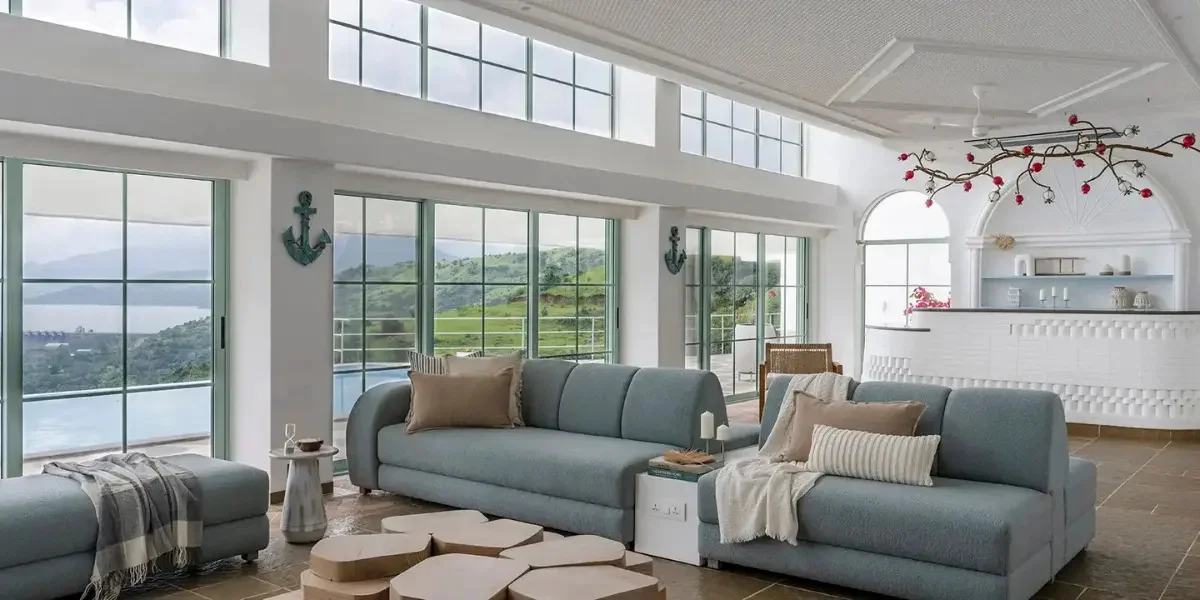

Biophilic Design Elements for Villa Apartment Interiors focus on creating living spaces that combine luxury, comfort and a meaningful connection with nature. Modern villa apartments are increasingly being designed as private retreats where natural elements contribute to the overall aesthetic and experience of the home. One of the most effective ways to achieve this is through biophilic interior design.
Biophilic design brings elements of the natural world into interior spaces through plants, natural materials, daylight, water, organic forms, natural textures and views of greenery. In villa apartments, these elements can make large living areas feel calmer and more welcoming while adding depth and character to the overall interior.
Unlike simply decorating a home with indoor planters, biophilic design is a broader approach. It considers how light, air, materials, colours, textures, spatial planning and nature-inspired elements work together.
For luxury villa apartment interiors in India, biophilic design can be particularly effective because it allows designers to combine contemporary architecture with materials such as natural stone, timber, cane, linen, handcrafted surfaces and indoor greenery.
FAQs: What Is Biophilic Design?
1. What is biophilic interior design?
Biophilic interior design is an approach that connects indoor spaces with nature using elements such as plants, daylight, natural materials, organic forms, natural colours and views of greenery.
2. Is biophilic design only about adding plants?
No. Plants are one element of biophilic design. Natural light, ventilation, materials, textures, colours, water and nature-inspired forms can also contribute to a biophilic interior.
3. Why is biophilic design suitable for villa apartments?
Villa apartments often have generous living spaces, balconies, terraces and large windows, making them suitable for incorporating greenery, natural light and outdoor views.
4. Can biophilic design work in luxury interiors?
Yes. Natural stone, premium timber, curated plants, bespoke planters and sophisticated natural textures can create a luxurious biophilic interior.
5. Can biophilic design be used in urban apartments?
Yes. Even apartments in dense cities can incorporate biophilic elements through indoor plants, natural finishes, daylight, balconies, green walls and nature-inspired materials.
Why Biophilic Design Works for Villa Apartment Interiors
A villa apartment provides an opportunity to create a stronger connection between indoor and outdoor spaces. Large windows, balconies, terraces, double-height areas and expansive living rooms can become natural transition zones between the home and its surroundings.
Biophilic design can also soften the visual impact of contemporary architecture. Clean lines, glass, concrete and metal can be balanced with timber, stone, greenery and tactile fabrics.
The result is an interior that feels sophisticated without becoming overly formal.
More visually relaxing interiors
Greater use of natural daylight
Warmer and more tactile spaces
Better indoor-outdoor continuity
Greater visual variety through natural textures
A timeless alternative to highly trend-driven interiors
Opportunities to personalise luxury spaces
For homeowners searching for luxury villa apartment interior design ideas in India, biophilic design offers a way to combine contemporary aesthetics with natural warmth.
FAQs: Benefits of Biophilic Design in Villa Apartments
1. What are the benefits of biophilic design in a villa apartment?
Biophilic design can create a calmer visual environment, improve the connection between indoor and outdoor spaces and introduce natural warmth through greenery, daylight and materials.
2. Does biophilic design make a luxury home look less sophisticated?
No. When carefully curated, natural stone, timber, plants and organic textures can complement high-end finishes and create a refined luxury aesthetic.
3. Can biophilic design make a large villa apartment feel warmer?
Yes. Natural materials, greenery, warm wood tones and textured fabrics can soften expansive spaces and make them feel more inviting.
4. Is biophilic design suitable for contemporary villa interiors?
Yes. It works particularly well with contemporary architecture because organic materials and greenery provide contrast against clean architectural forms.
5. Is biophilic design a lasting interior design trend?
Biophilic design is more than a decorative trend because it focuses on the relationship between people, architecture and nature, making it adaptable to different interior styles.
1. Indoor Plants as Biophilic Design Elements
Indoor plants are perhaps the most recognisable element of biophilic interior design ideas. However, in a luxury villa apartment, plants should be treated as part of the overall interior composition rather than simply placed wherever space is available.
Large statement plants can anchor living rooms, while smaller plants can be integrated into shelves, consoles, bathrooms and bedrooms.
Suitable plant strategies include:
Statement plants:
Large palms, ficus, bird of paradise and other architectural plants can create a dramatic focal point.
Clustered greenery:
Combining plants of different heights creates a more natural composition.
Built-in planters:
Planters can be incorporated into partitions, window seats, balconies and cabinetry.
Hanging plants:
These can introduce greenery at different heights, especially where floor space is limited.
Green corners:
An unused corner can become a dedicated indoor garden with layered planting and accent lighting.
For Indian villa apartments, plant selection should also consider the available sunlight, indoor temperature, humidity and maintenance requirements.
FAQs: Indoor Plants for Villa Apartments
1. Which indoor plants work well in luxury villa apartments?
Popular choices include palms, fiddle-leaf figs, ficus, bird of paradise, snake plants, ZZ plants and other varieties selected according to available light and maintenance requirements.
2. Where should large indoor plants be placed?
Large plants can work well beside sofas, near large windows, in living room corners, beside staircases or in transition areas between indoor and outdoor spaces.
3. How many plants should a luxury villa apartment have?
There is no fixed number. The quantity should depend on the size, daylight, architecture and desired visual density of the space.
4. Can plants be incorporated into built-in furniture?
Yes. Custom planters can be integrated into shelving, partitions, cabinetry, window areas and other architectural elements.
5. Are low-maintenance plants suitable for biophilic interiors?
Yes. Low-maintenance varieties can provide greenery without requiring intensive daily care.
2. Maximising Natural Light
Natural daylight is one of the most important components of a successful biophilic interior. Villa apartments with large windows can use daylight as an architectural feature rather than treating it simply as illumination.
Large glazing, skylights, clerestory windows and glass doors can help connect interiors with the changing qualities of the outdoors.
Window treatments should be selected carefully. Heavy curtains can block daylight, while sheer curtains, blinds or layered treatments can provide privacy without completely eliminating natural light.
Mirrors and reflective surfaces can also help distribute daylight deeper into a room.
- Use large windows wherever architectural conditions allow.
- Keep key window areas visually uncluttered.
- Use sheer curtains to filter harsh sunlight.
- Position seating to benefit from natural views.
- Use reflective surfaces strategically.
- Combine daylight with layered artificial lighting for evenings.
FAQs: Natural Light in Biophilic Villa Interiors
1. Why is natural light important in biophilic design?
Natural light strengthens the visual connection with the outdoors and introduces changing light conditions throughout the day.
2. How can a villa apartment maximise natural daylight?
Large windows, glass doors, skylights, light-coloured finishes, reflective surfaces and appropriately selected window treatments can help maximise daylight.
3. Can natural light be used in a luxury interior without causing glare?
Yes. Sheer curtains, blinds, solar-control glazing and layered window treatments can help manage glare while retaining daylight.
4. How can dark villa apartments incorporate biophilic design?
Artificial lighting, indoor greenery, natural materials, reflective finishes and nature-inspired colours can create a biophilic atmosphere even where daylight is limited.
5. Should furniture be placed near large windows?
Furniture can be positioned to take advantage of views and daylight, provided circulation, heat gain and glare are considered.
3. Natural Materials and Textures
Natural materials give biophilic interiors their tactile quality. Instead of relying exclusively on polished synthetic surfaces, villa apartments can incorporate materials that reveal natural variation.
Marble
Travertine
Limestone
Timber
Rattan
Cane
Bamboo
Linen
Cotton
Wool
Terracotta
Handmade ceramics
Stone can be used for flooring, walls, countertops or feature surfaces, while timber can introduce warmth through flooring, wall panels, furniture and cabinetry.
Textiles are equally important. Linen curtains, textured upholstery, wool rugs and woven accessories can add softness to otherwise architectural interiors.
The key is balance. Using too many natural materials without visual hierarchy can make the space feel busy. A curated material palette is generally more effective.
FAQs: Natural Materials for Biophilic Interiors
1. Which natural materials are best for biophilic villa interiors?
Natural stone, timber, cane, rattan, bamboo, linen, wool, cotton and handmade ceramics are commonly used to introduce natural texture.
2. Is marble considered a biophilic material?
Natural marble can contribute to a biophilic interior because its organic veining and geological character introduce natural variation.
3. Can wood be used in luxury villa apartment interiors?
Yes. Timber can be used for flooring, furniture, wall panelling, cabinetry and decorative details.
4. How can natural materials be combined without making a room look rustic?
Pair natural materials with contemporary furniture, refined lighting, clean architectural lines and a controlled colour palette.
5. Are natural materials difficult to maintain?
Maintenance varies by material. Stone, timber and natural fabrics each require appropriate cleaning and protective treatments.
4. Nature-Inspired Colour Palettes
Colour is another powerful way to introduce biophilic qualities into villa apartment interiors.
Instead of using only literal greens, designers can draw inspiration from forests, beaches, mountains, soil and botanical landscapes.
Olive
Moss
Forest green
Sand
Beige
Taupe
Terracotta
Warm white
Stone grey
Earthy brown
Muted blue
Green can be used as an accent or as a dominant colour depending on the character of the space. Earthy neutrals work particularly well as foundational colours, allowing plants and natural materials to become visual highlights.
In luxury interiors, muted and sophisticated versions of nature-inspired colours often work better than highly saturated shades.
FAQs: Biophilic Colour Schemes
1. What colours are best for biophilic interior design?
Earthy neutrals, greens, muted blues, warm whites, terracotta and natural browns are commonly associated with biophilic colour palettes.
2. Does a biophilic interior need to be green?
No. Biophilic design can use colours inspired by sand, stone, wood, water, soil and other natural environments.
3. Which colour works well with natural wood?
Warm whites, beige, taupe, olive, muted green and earthy neutral tones can complement natural timber.
4. Can dark colours be used in biophilic interiors?
Yes. Deep green, charcoal, brown and muted blue can add depth when balanced with daylight, lighter materials and greenery.
5. How can colour be used in a luxury villa apartment?
Use neutral base colours and introduce richer nature-inspired shades through upholstery, artwork, feature walls, rugs and accessories.
5. Organic Shapes and Nature-Inspired Forms
Nature rarely follows perfect geometric patterns. Introducing curved and organic forms can therefore make contemporary villa interiors feel softer and more natural.
Curved sofas, rounded coffee tables, sculptural lighting, arched openings and organically shaped rugs can create visual movement.
These forms are particularly effective when combined with hard architectural surfaces such as stone, glass and metal.
Round coffee tables
Organic-shaped rugs
Arched doorways
Sculptural furniture
Rounded lighting fixtures
Free-form mirrors
Wave-inspired partitions
The objective is not to make everything curved. Instead, organic shapes can be strategically introduced to break up excessive linearity.
FAQs: Organic Forms in Villa Interiors
1. What are organic shapes in interior design?
Organic shapes are forms inspired by nature, often featuring curves, irregular outlines and flowing silhouettes rather than strict geometric lines.
2. Why use curved furniture in a biophilic interior?
Curved furniture can soften architectural lines and introduce a more natural visual rhythm.
3. Can organic shapes work in minimalist interiors?
Yes. A small number of carefully selected curved elements can complement minimalist architecture without creating visual clutter.
4. Are curved sofas suitable for large villa living rooms?
Yes. Large curved sofas can create a strong focal point and help define seating zones in spacious living areas.
5. How can organic forms be introduced without renovating the home?
Furniture, rugs, mirrors, lighting, artwork and accessories can introduce organic shapes without major architectural changes.
6. Water Features and Reflective Elements
Water is a strong natural element that can add visual and sensory interest to villa apartment interiors.
Where architectural conditions permit, a small indoor water feature, courtyard fountain, reflecting surface or balcony water installation can create a connection with nature.
Even when an actual water feature is impractical, reflective surfaces can create a similar visual effect. Glass, mirrors and polished stone can reflect light and greenery throughout the interior.
For luxury villa apartments, water features should be designed carefully to avoid excessive humidity, maintenance issues or unwanted noise.
FAQs: Water Features in Biophilic Interiors
1. Are water features suitable for villa apartments?
Yes, provided the feature is appropriately designed for the space, drainage, waterproofing, maintenance and humidity are properly considered.
2. Where can a water feature be installed?
Depending on the architecture, water features can work in entry spaces, courtyards, balconies, terraces or specially designed indoor zones.
3. Do indoor water features require maintenance?
Yes. Water quality, pumps, surfaces and drainage need regular maintenance.
4. Can mirrors replace water features in biophilic interiors?
Mirrors cannot replicate water completely, but they can reflect daylight, plants and outdoor views and enhance the perception of natural elements.
5. Are water features suitable for small villa apartments?
Small-scale features may work when they are proportionate to the available space and professionally waterproofed.
7. Indoor-Outdoor Connection
One of the strongest opportunities in villa apartment design is creating a seamless relationship between interior rooms and balconies, terraces, gardens or outdoor decks.
Large sliding glass doors can visually connect the living room with a balcony. Similar flooring tones can create continuity, while outdoor planting can visually extend greenery into the interior.
- Use large glass openings.
- Continue similar flooring materials across thresholds where suitable.
- Align indoor furniture with outdoor views.
- Use matching or complementary colours.
- Introduce plants on both sides of the transition.
- Create outdoor seating that extends the living zone.
- Use lighting that works across both spaces.
This approach can be particularly effective in urban luxury apartments where outdoor space may be limited.
FAQs: Indoor-Outdoor Villa Design
1. How do you connect a villa apartment interior with the outdoors?
Large glass openings, continuous visual materials, coordinated planting, aligned furniture and outdoor living zones can strengthen indoor-outdoor continuity.
2. Can a balcony become part of the living room design?
Yes. A balcony can be designed as an extension of the living area through coordinated furniture, flooring, lighting and planting.
3. How can small balconies be made more biophilic?
Use vertical gardens, planters, compact trees, climbers, natural flooring and comfortable outdoor seating.
4. Does indoor-outdoor design work in high-rise apartments?
Yes. Balconies, terraces and large windows can provide valuable opportunities to create visual connections with nature.
5. What is the biggest mistake when designing an indoor-outdoor transition?
Treating the indoor and outdoor spaces as completely separate environments can weaken visual continuity.
8. Biophilic Lighting Design
Biophilic design should continue after sunset. Artificial lighting can be used to recreate some of the visual qualities of natural environments.
Layered lighting is particularly effective. Ambient lighting provides general illumination, task lighting supports specific activities and accent lighting highlights plants, artwork, textures and architectural features.
Warm lighting can enhance timber, stone and natural fabrics while creating a comfortable evening atmosphere.
Concealed cove lighting
Pendant fixtures made from natural materials
Accent lighting for plants
Wall washers for stone surfaces
Decorative table lamps
Soft balcony lighting
Daylight-responsive lighting systems
FAQs: Lighting for Biophilic Villa Interiors
1. What lighting works best with biophilic interiors?
Layered lighting with warm ambient illumination, accent lighting and task lighting works well with natural materials and greenery.
2. Should indoor plants be illuminated at night?
Selected plants can be highlighted with subtle accent lighting, particularly when they are used as focal points.
3. Can artificial lighting replace natural daylight?
Artificial lighting can support the atmosphere but cannot fully replicate the benefits and changing qualities of natural daylight.
4. What colour temperature works well for luxury interiors?
Warm white lighting is often effective for creating a comfortable atmosphere and highlighting natural materials.
5. How can lighting make natural stone look better?
Grazing or wall-washing techniques can highlight the texture and veining of stone surfaces.
9. Biophilic Design for Different Rooms
Biophilic design should not look identical throughout the villa apartment. Each room can interpret the concept differently according to its purpose.
Living Room
The living room can become the primary biophilic zone with large plants, natural stone, timber, daylight and views of greenery.
Dining Area
A natural wood dining table, pendant lighting, textured upholstery and botanical arrangements can introduce subtle biophilic elements.
Kitchen
Natural stone countertops, timber cabinetry, indoor herbs and daylight can add organic warmth.
Bedroom
Bedrooms benefit from softer applications such as linen, muted colours, timber, plants and diffused lighting.
Bathroom
Stone, timber-look finishes, plants, daylight and spa-inspired materials can transform the bathroom into a natural retreat.
Balcony or Terrace
Outdoor greenery, planters, natural materials and comfortable furniture can extend the biophilic experience beyond the interior.
FAQs: Room-Wise Biophilic Interior Design
1. How can I create a biophilic living room?
Combine indoor plants, natural materials, daylight, nature-inspired colours, organic furniture and views of greenery.
2. How can biophilic design be used in a villa bedroom?
Use timber, linen, muted earthy colours, indoor plants, natural textures and soft lighting for a calm atmosphere.
3. What are good biophilic ideas for a luxury kitchen?
Natural stone, timber, indoor herbs, daylight, organic textures and views of greenery can bring biophilic qualities into a kitchen.
4. How can I make a bathroom more biophilic?
Use natural stone, warm timber tones, greenery, daylight where possible and spa-inspired textures.
5. How can a balcony contribute to biophilic villa design?
A balcony can become a green extension of the home using layered planting, natural materials, outdoor seating and appropriate lighting.
10. Sustainable and Locally Inspired Materials
Biophilic design and sustainability can complement one another when materials are selected thoughtfully.
Using durable materials, locally sourced products and responsibly produced finishes can reduce unnecessary material transportation and support a more authentic relationship with the surrounding environment.
For Indian villa interiors, designers can explore materials and crafts that reflect regional traditions while maintaining a contemporary aesthetic.
Examples can include natural stone, locally sourced timber where appropriate, cane, bamboo, handmade ceramics, woven textiles and traditional craft techniques.
The focus should be on durability, responsible sourcing, maintenance and lifecycle, rather than assuming that every natural material is automatically sustainable.
FAQs: Sustainable Materials in Biophilic Design
1. Is biophilic design the same as sustainable interior design?
No. They overlap but are different concepts. Biophilic design focuses on connection with nature, while sustainable design considers environmental impact, resource use and lifecycle.
2. Are natural materials always sustainable?
Not necessarily. Sustainability depends on sourcing, manufacturing, transportation, durability and lifecycle.
3. Can Indian crafts be used in luxury biophilic interiors?
Yes. Handcrafted furniture, woven materials, ceramics and traditional techniques can add cultural character and natural texture.
4. Why use locally sourced materials?
Local sourcing can reduce transportation requirements and create opportunities to work with regional materials and craftsmanship.
5. How can sustainable materials look luxurious?
High-quality craftsmanship, refined detailing, thoughtful proportions and sophisticated combinations can make sustainable materials feel highly luxurious.
11. Biophilic Design for Indian Villa Apartments
India’s climate, architecture and cultural relationship with nature create interesting opportunities for biophilic villa apartment design.
In cities such as Mumbai, Pune, Bengaluru, Hyderabad, Delhi and Chennai, designers can adapt biophilic principles according to local climate, sunlight, humidity and available outdoor space.
In Mumbai, for example, balconies and large windows can become important transition spaces between the interior and the outdoor environment. However, plant selection and material choices should account for humidity, monsoon conditions and maintenance.
In warmer regions, shading, ventilation and solar control can become important parts of the design strategy.
Biophilic design should therefore be climate-responsive rather than purely aesthetic.
FAQs: Biophilic Villa Interiors in India
1. Is biophilic interior design suitable for Indian homes?
Yes. India’s diverse climates, abundant daylight and strong connection with plants and natural materials make biophilic principles highly adaptable.
2. What should Mumbai homeowners consider when creating a biophilic villa interior?
Humidity, monsoon exposure, ventilation, plant selection, moisture-resistant materials and balcony maintenance should be considered.
3. Which natural materials work well in Indian luxury interiors?
Natural stone, timber, cane, rattan, linen, handcrafted ceramics and locally inspired materials can work well when selected for the project’s climate and maintenance requirements.
4. Can biophilic design work in an urban Mumbai apartment?
Yes. Indoor plants, balconies, natural materials, daylight, greenery and nature-inspired colours can create a strong connection with nature even in a dense urban setting.
5. How can Indian craftsmanship be incorporated into biophilic interiors?
Furniture, woven elements, handmade ceramics, traditional crafts and locally inspired textures can introduce cultural and natural character.
12. How to Create a Luxury Biophilic Villa Apartment
A successful luxury biophilic interior is not created by adding as many natural elements as possible. It depends on balance, proportion and intentionality.
Start with the architecture and identify opportunities for daylight, views and indoor-outdoor connections. Then develop a controlled material palette combining stone, timber, textiles and greenery.
Next, introduce organic forms through furniture and lighting. Finally, use plants and accessories as carefully selected finishing elements rather than filling every available corner.
A practical design approach:
Step 1: Study the natural context
Look at existing views, daylight, balconies, terraces and surrounding vegetation.
Step 2: Establish the material palette
Select two or three primary natural materials and supporting textures.
Step 3: Plan greenery
Choose plants according to light, scale and maintenance requirements.
Step 4: Introduce natural colours
Use earthy neutrals as a foundation and add carefully selected botanical shades.
Step 5: Add organic forms
Use curves and sculptural forms to soften architectural geometry.
Step 6: Layer the lighting
Create a lighting scheme that highlights natural materials and greenery after dark.
Step 7: Connect indoor and outdoor areas
Use coordinated materials, planting and furniture to visually extend the living spaces.
FAQs: Creating a Luxury Biophilic Villa
1. What is the first step in designing a biophilic villa apartment?
Start by assessing daylight, views, ventilation, balconies, terraces and existing architectural opportunities for connecting with nature.
2. How do you make biophilic design look luxurious?
Use high-quality natural materials, carefully selected plants, bespoke furniture, refined lighting and a restrained colour palette.
3. Can too many plants make a luxury interior look cluttered?
Yes. Plants should be selected according to scale, composition and maintenance rather than simply maximising the number of plants.
4. Should every room have plants?
Not necessarily. Some rooms may benefit more from natural materials, daylight, views, textures or nature-inspired colours.
5. What makes a biophilic villa interior successful?
A successful design creates a balanced relationship between architecture, natural light, greenery, materials, textures, colours and outdoor spaces.
Common Biophilic Design Mistakes to Avoid
Biophilic design can lose its sophistication when natural elements are added without considering the architecture.
Common mistakes include:
1Overusing plants
Too much greenery can make a luxury interior appear cluttered rather than curated.
2Choosing plants without considering light
A plant may look beautiful initially but struggle if its lighting requirements are not met.
3Using too many natural materials
Combining stone, multiple types of timber, cane, rattan and several textiles without hierarchy can create visual noise.
4Ignoring maintenance
Plants, water features, natural stone and timber require appropriate care.
5Treating biophilic design as a style
Biophilic design is a design strategy, not simply an aesthetic involving green colours and plants.
6Forgetting the outdoor environment
If a villa apartment has a balcony or terrace, it should be considered part of the overall nature connection.
FAQs: Biophilic Design Mistakes
1. What is the biggest mistake in biophilic interior design?
Adding natural elements without considering the architecture, proportions, maintenance and overall design concept is one of the most common mistakes.
2. Can too much greenery be a problem?
Yes. Excessive greenery can make a space feel cluttered and can increase maintenance requirements.
3. Why is plant selection important?
Plants need suitable light, temperature, humidity and care conditions to remain healthy.
4. Can too many natural materials make an interior look dated?
Yes. A carefully controlled palette generally creates a more sophisticated and timeless result.
5. Is green paint enough to create a biophilic interior?
No. Green colour alone does not create biophilic design. The concept works best when colour is combined with natural materials, light, greenery and spatial connections.
How to Choose the Right Biophilic Design Approach
Every villa apartment has different architectural conditions, so there is no single formula for biophilic design.
Consider these factors before developing the interior:
| Factor | What to Consider |
|---|---|
| Natural light | Window orientation, daylight levels and glare |
| Plants | Species, size, maintenance and available light |
| Materials | Durability, sourcing and maintenance |
| Climate | Humidity, heat, rainfall and ventilation |
| Outdoor space | Balcony, terrace, garden or views |
| Colour | Natural tones that complement the architecture |
| Furniture | Organic shapes and natural upholstery |
| Lighting | Warm, layered and material-focused illumination |
| Maintenance | Cleaning, plant care and material upkeep |
| Lifestyle | How residents actually use each space |
The best biophilic villa apartment interiors are personalised to the homeowner, architecture and environment rather than following a fixed checklist.
FAQs: Choosing Biophilic Design Elements
1. How do I choose biophilic elements for my villa apartment?
Begin with the available daylight, outdoor views, architectural layout, climate, lifestyle and maintenance requirements.
2. Should biophilic design be planned during construction or renovation?
It can be incorporated at either stage, but planning it during architectural or renovation stages provides more opportunities for integrated planters, lighting, water features and indoor-outdoor connections.
3. How much should biophilic design cost?
Costs vary significantly depending on materials, custom furniture, landscaping, lighting, architectural changes and the scale of the project.
4. Can biophilic design be customised to different interior styles?
Yes. Biophilic principles can be adapted to contemporary, minimalist, modern, transitional, classic and eclectic interiors.
5. How do I balance luxury and nature in a villa interior?
Use natural elements selectively and combine them with refined craftsmanship, sophisticated lighting, premium finishes and carefully planned spatial proportions.
Conclusion
Biophilic design for villa apartment interiors is about much more than adding indoor plants. It is a holistic approach that brings together natural light, greenery, organic forms, natural materials, earthy colours, textures, water and indoor-outdoor connections.
For luxury villa apartments, the most successful approach is one where nature becomes part of the architecture rather than an afterthought. A stone wall can become a visual anchor, a balcony can extend the living room, a carefully positioned tree can frame a window, and natural timber can soften a contemporary space.
The result is an interior that feels luxurious, sophisticated, comfortable and connected to its surroundings.
Whether the home is a high-rise villa apartment in Mumbai or a spacious urban residence elsewhere in India, biophilic design can be adapted to the architecture, climate and lifestyle of the homeowner.
FAQS
What is biophilic design for villa apartment interiors?
Biophilic design for villa apartment interiors is an approach that connects indoor living spaces with nature through natural light, indoor plants, natural stone, timber, organic shapes, earthy colours, water features, natural textures and indoor-outdoor connections. In luxury villa apartments, these elements can create warmer, calmer and more visually sophisticated spaces while strengthening the relationship between the home and its natural surroundings.
What are the main elements of biophilic interior design?
The main elements include natural light, plants, natural materials, nature-inspired colours, organic forms, water, natural textures, ventilation, outdoor views and indoor-outdoor connections.
How do you make a villa apartment more biophilic?
Use indoor greenery, maximise natural daylight, introduce stone and timber, choose earthy colours, add organic-shaped furniture and strengthen connections between living spaces and balconies or terraces.
What plants are best for a luxury villa apartment?
The best plants depend on available light and maintenance conditions, but architectural plants such as palms, ficus and bird of paradise, along with low-maintenance options such as snake plants and ZZ plants, can work well.
Can biophilic design be luxurious?
Yes. Premium natural stone, timber, bespoke planters, curated greenery, sophisticated lighting and high-quality natural textiles can create a luxurious biophilic interior.
Is biophilic design suitable for apartments in Mumbai?
Yes. Mumbai apartments can incorporate biophilic design through balconies, indoor plants, natural materials, daylight, ventilation, greenery and carefully selected finishes suited to the city’s humid and monsoon climate.