

The FOAID Awards sit in the middle of a busy December in Mumbai: two days at a hotel in the city, hundreds of architects, interior designers and students under one roof, and a jury that had to pick what deserved attention. The 2017 Mumbai edition was one of those events, and Sumessh Menon was on its jury.
FOAID stands for the Festival of Architecture & Interior Designing. Plenty of homeowners have never heard of it, which is fair. But the people who judge design, and the way they talk about it, shape what gets built in Indian homes and restaurants a few years later.
At Sumessh Menon & Associates, the FOAID 2017 edition is remembered for three things: the jury seat, a place on the exhibition panel, and a spot in a coffee table book launched at the event. This page explains what the festival was, what happened, and why an award or a jury role is worth understanding when you choose a designer.
Everything below comes from what the studio has published about the event. Where the studio has not said something (the award categories, the names of winners, the judging criteria), this page does not guess.
1. What Are the FOAID Awards?
The FOAID Awards are part of FOAID, the Festival of Architecture & Interior Designing. The festival brings designers, architects and other creatives together to show work, talk about ideas and meet each other. The awards are the recognition side of that gathering.
The edition covered here is the 2017 Mumbai edition. The studio describes FOAID as one of the better-known interior design events in India. That is the studio’s own description, so read it as a view from inside the profession, not a ranking.
What the festival is made of
An expo with work by recognised names in the industry. Exhibitions. Panel discussions. Plenty of networking. And a large interior design showcase with projects from across India, which was the main draw in 2017.
Think of it as a long trade fair crossed with a design school review. Designers are looking at each other’s work, which is a different kind of pressure.
2. What Happened at FOAID 2017 in Mumbai
The 2017 Mumbai edition ran over two days, 1 and 2 December 2017, at The Lalit in Mumbai. More than 300 professionals attended, a mix of architects, interior design specialists and students.
The mix matters. A room with only established names tends to repeat itself. A room with students in it asks basic questions, like why a corridor is that wide or why a bar is lit from below, and the answers are often more useful than the panel talk.
The dates:
1 and 2 December 2017.
The venue:
The Lalit, Mumbai.
The crowd:
Over 300 architects, interior design professionals and students.
The main draw:
An interior design showcase with projects from across India.
3. The Theme: “Let’s Uncondition”
The theme of the 2017 edition was “Let’s Uncondition”. The idea was to question the habits designers fall into and try things outside them.
Anyone who has sat through a few client meetings will recognise the problem. A living room gets a sofa wall and a TV unit because that is how living rooms get done. A restaurant gets the same pendant lights as the one down the road. Unconditioning means asking whether any of it is needed, and sometimes the honest answer is yes. It is still worth asking.
1. What does FOAID stand for?
FOAID stands for the Festival of Architecture & Interior Designing. The awards are a part of that festival.
2. When and where was the 2017 Mumbai edition held?
On 1 and 2 December 2017 at The Lalit, Mumbai.
3. What was the theme of FOAID 2017?
“Let’s Uncondition”, an invitation to question habits and explore new ideas in design.
4. Was Sumessh Menon & Associates part of FOAID 2017?
Yes. Sumessh Menon sat on the jury, and his work was shown on an exhibition panel and in a coffee table book launched at the event.
4. Why the FOAID Awards Matter to Designers and Homeowners
For a designer, an event like this is a mirror. Work that looks fine on your own screen can look different next to forty other projects, judged by people who have seen thousands.
For a homeowner, the link is less direct but real. Awards and festivals set the tone for what the profession considers good. A jury that rewards originality and storytelling pushes designers away from copying catalogue pictures. A jury that only rewards polish pushes them the other way.
What an award can and cannot tell you
It tells you that other designers looked at a piece of work and rated it. It does not tell you that the designer listens, finishes on site, or suits your family. A trophy cannot do that, and no honest designer will say it can.
So treat awards as one signal among several. Look at the finished projects, which are on the studio’s awards page and in the portfolio. Visit a completed home if you can. Ask who actually ran the site.
Be a little wary of vague claims, too. “Award-winning” with no name, year or category attached is easy to write and hard to check. A good habit is to ask three things: which award, which year, and for which project.
5. Sumessh Menon on the FOAID Jury
Sumessh Menon served as a jury member at FOAID 2017, judging work across several genres of design. A jury seat is a different thing from winning an award. It means peers trust your eye enough to ask for it.
The studio notes that he talked about storytelling in design and the value of originality. After the event he called it inspiring to see how many different ways designers read the same brief.
That is a fair summary of what a jury sees. Ten designers get the same kind of project and produce ten answers. Some feel borrowed. A few feel like they could only have been made for that place and that client.
Why storytelling comes up so often in design
In a house, the story is usually plain: where the family sits in the evening, where guests are received, how the morning light moves across the dining room. In a restaurant, the story is the evening itself, from the door to the last table. A project that has a clear story is easier to design, easier to build, and easier to remember.
Sumessh Menon’s Work at FOAID 2017
Apart from judging, Sumessh Menon’s own designs were featured on an exhibition panel at the festival. A panel puts work in front of the whole room without any speech attached, so the pictures have to do the talking.
The Coffee Table Book
His work also appeared in a coffee table book launched at the event, which celebrated leading designers and architects from India. The studio has not published the book’s title or publisher, so this page leaves them out.
6. What Juries Tend to Look For
The festival has not published its judging criteria, so this is general, not specific to FOAID. Across design juries, a few questions come up again and again.
Is the idea clear?
Can you explain the project in a sentence? If not, the design may be a pile of good ideas without a centre.
Does the plan work?
Pretty rooms with awkward circulation lose points quickly. Good planning is quiet, which is why it gets overlooked.
Does it feel like this place?
A bar in Lower Parel should not feel like a bar in Dubai. Context counts.
Was it finished well?
Joints, junctions, lighting and the small things that only show once people actually use the space.
None of that is exotic. It is the same checklist a careful client uses on a site visit, only applied with more experience.
1. Did the festival publish its judging criteria?
Not on the pages this article draws from. The questions above are general ones that most design juries ask.
2. Is winning an award the same as serving on the jury?
No. Winning means your project was rated by others. Serving on the jury means you were asked to rate the work of others.
3. Should a homeowner choose a designer because of awards?
It can help, but it should not decide it. Look at the finished work and the way the designer runs a site as well.
4. How has Sumessh Menon & Associates described its role at the festival?
The studio describes Sumessh Menon as a jury member, a featured designer on the exhibition panel, and a contributor to the coffee table book launched at the event.
7. Other Recognition Listed by the Studio
FOAID is not the only recognition on the studio’s pages. The press page lists two Aces of Space Design Awards dated 23 November 2019. One is in Interior Design, Washroom, for the bathrooms of a restaurant and bar in Kamala Mills, Lower Parel. The other is in Interior Design, Hospitality & Leisure, for Koko 2.0 in Mumbai.
The same page notes that Sumessh Menon was featured in the “HOT 100” list of most renowned designers of India, in the 10th anniversary issue of Architect & Interiors India magazine, in July 2018. The studio also lists “India’s Top 50 Designers”, given by the iGen Awards. The full list is on the awards page.
If you want the story of another recognition, the studio has written about it separately in its post on an interior designer award, and about bar and restaurant recognition in this one on restaurant and bar design awards. This page stays with FOAID.
8. How to Read an Award Honestly
Awards are useful if you read them like a label on a packet: the details matter more than the headline.
Check the name.
Real awards have a name you can search. If you cannot find it, treat the claim with caution.
Check the year.
An award from eight years ago says less about this year’s work than people think.
Check what was recognised.
A project, a person, a category, or the whole firm? Each means something different.
Check what the work looks like.
Pictures of the finished space matter more than a photograph of a trophy.
The two Aces of Space awards above are a fair example. They are for named categories, tied to named projects, with a date. That is the level of detail worth asking any designer for.
9. How Sumessh Menon & Associates Approaches Recognition and Design
Sumessh Menon & Associates is an architecture and interior design studio in Mumbai, working on luxury residences and on hospitality design: restaurants, bars, cafes, lounges and clubs. Its recognition comes from the projects, and the projects are where this page ends up.
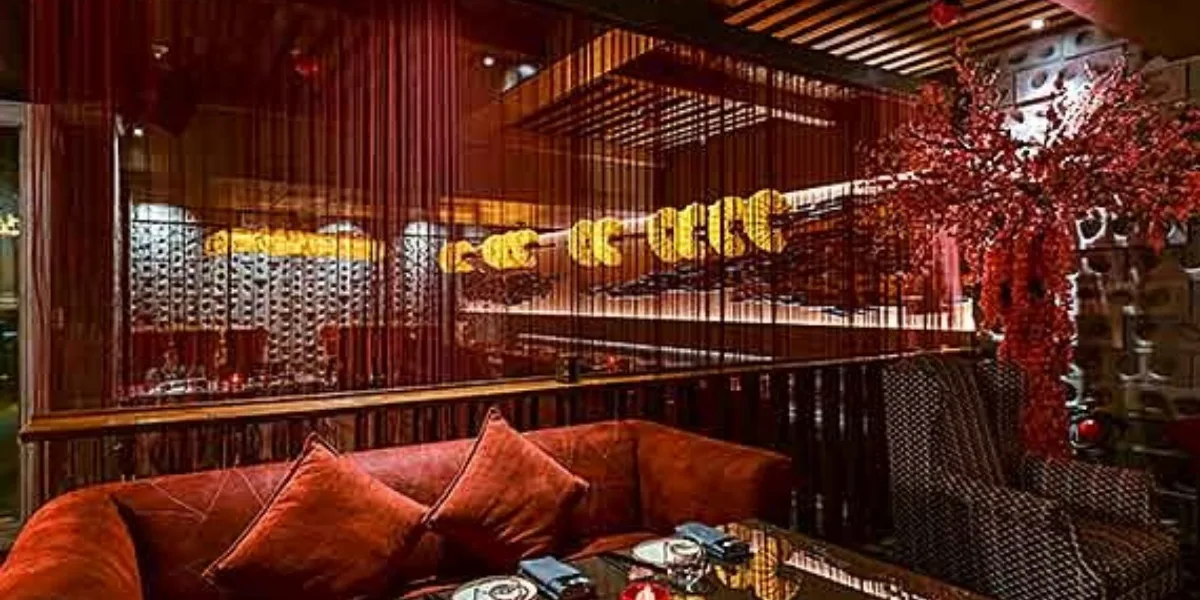
Koko 2.0 is a good example of how that looks in practice. It is an extension of an existing bar in Kamala Mills, adding Japanese cuisine. The project page describes a lounge and a dining area separated by a burgundy wire mesh curtain, communal seating, a feature wall in sculpted siporex blocks, a custom lighting piece made of banana paper and a charcoal artwork of floating rocks. It also describes a synthetic cherry blossom tree. The mesh curtain does the splitting, so the two sides stay one connected space.
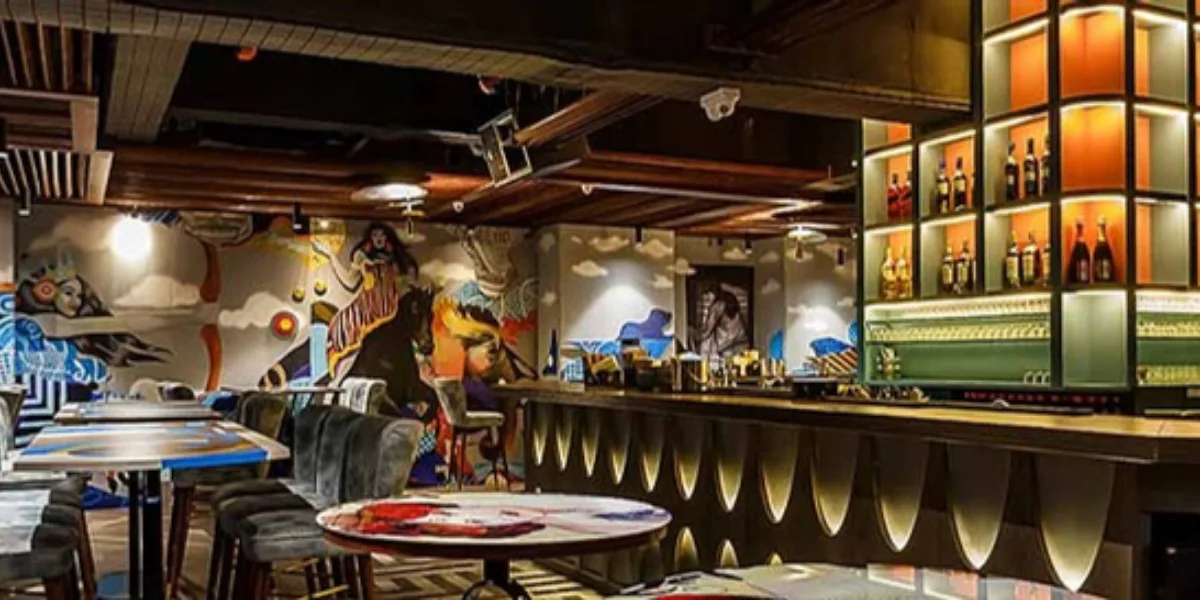
The restaurant and bar in Kamala Mills, covered on the 145 project page, is the one whose washrooms were recognised. Those washrooms use custom tiles with printed faces, which is a small, slightly cheeky idea carried out properly.
The brief first.
What the place is for, who will use it and how.
The plan next.
Where people enter, sit, wait and move.
Materials and light.
Chosen for the mood and for how they age in Mumbai humidity.
The finish on site.
The details that decide whether the idea survives construction.
You can read more about the founder on the Sumessh Menon page or get in touch through the studio page.
Conclusion: A Jury Seat, a Panel and a Book
FOAID 2017 was two days in Mumbai, over 300 people, one theme and a lot of design on show. For Sumessh Menon & Associates it meant a seat on the jury, a place on the exhibition panel and a page in a coffee table book.
For anyone choosing a designer, the useful lesson is not the festival itself. It is the habit of asking what an award really recognises, and then looking at the finished work.
A trophy is a start. The house you walk into is the answer.
Common FAQs: FOAID Awards
1. What is the FOAID Awards event?
It is the awards side of FOAID, the Festival of Architecture & Interior Designing, a gathering of architects, interior designers and students with an expo, exhibitions and panel talks.
2. Where was FOAID 2017 held?
At The Lalit in Mumbai, on 1 and 2 December 2017.
3. How many people attended the 2017 Mumbai edition?
More than 300 professionals, including architects, interior design specialists and students.
4. Who judges design awards like this?
Usually experienced designers and architects. At FOAID 2017, Sumessh Menon was one of the jury members.
5. Is FOAID open to the public?
The pages this article draws from describe an audience of architects, interior design professionals and students. Check with the organisers about attending a future edition.
6. What other awards has the studio listed?
Two Aces of Space Design Awards from 23 November 2019, a place in the HOT 100 list of 2018 and the iGen Awards Top 50 Designers. The details are on the press and awards pages.
7. Does Sumessh Menon & Associates design restaurants and bars as well as homes?
Yes. The studio designs luxury residences and hospitality spaces such as restaurants, bars, cafes, lounges and clubs.
8. Where can I see the studio’s hospitality work?
On the hospitality design page and in the portfolio, which includes Koko 2.0 and the Kamala Mills restaurant and bar mentioned here.


