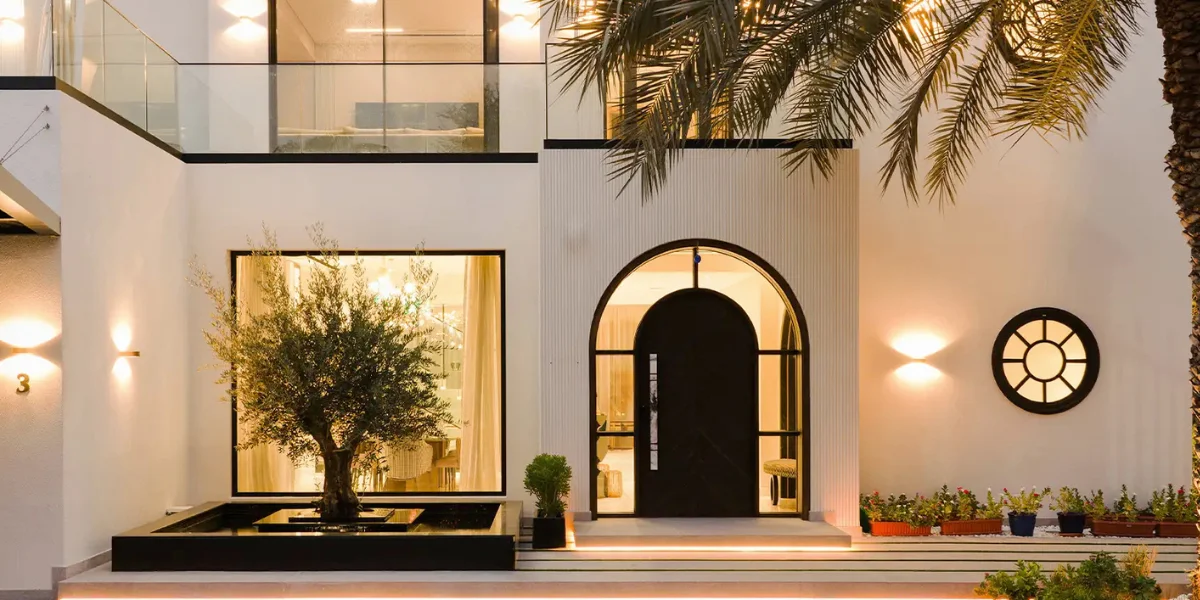
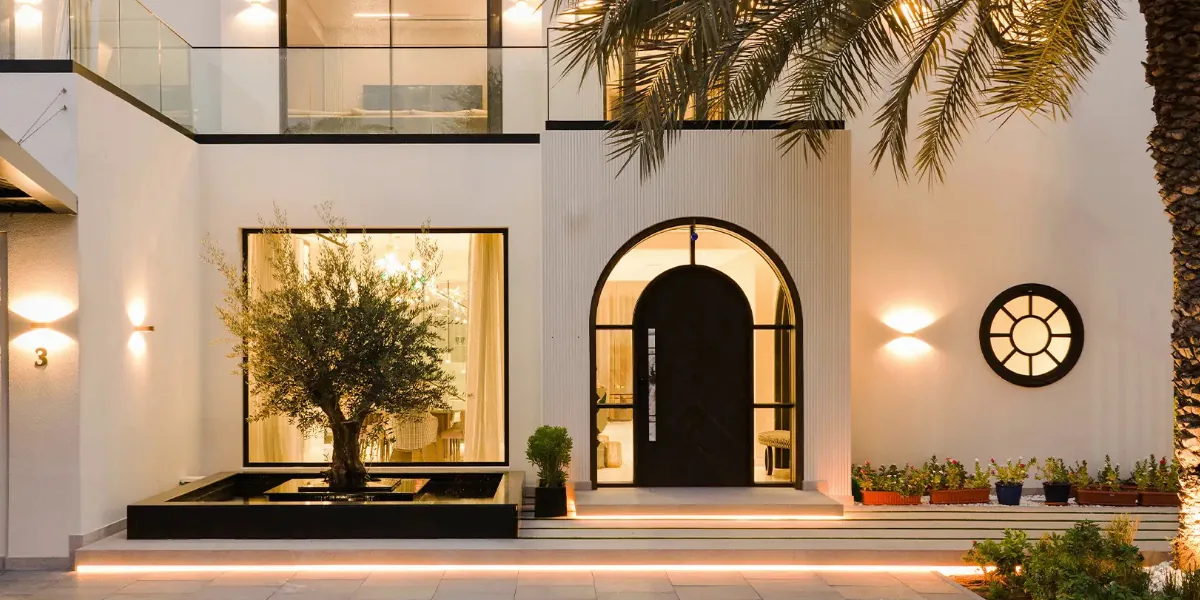
Weekend bungalow design has an awkward brief: the house is full for two days and empty for five. On a Saturday morning in Alibaug it holds fourteen people, three cars, wet swimming costumes and a cook who needs the kitchen. By Tuesday it holds a caretaker, a faint smell of damp and a lizard behind the fridge.
Most plans are drawn for the Saturday. They get the bedroom count right, the view right and the pool right. It’s the Tuesday that wears a weekend home down, and nobody draws the Tuesday on the first day.
A family from Mumbai building a second home in Alibaug, Lonavala, Karjat, Pawna or Goa is really designing two houses inside one set of walls. One is lively and takes a crowd. The other is quiet, shuts easily and looks after itself.
At Sumessh Menon & Associates, villa design starts with the homeowner’s lifestyle, and in a weekend home that lifestyle includes the empty days. So the plain question to put to every room is this: what happens here if nobody opens the door for a fortnight?
This guide goes through the decisions in the order they usually come up, from the plot to the power backup. None of it is free of trade-offs. A glass wall, a pool and a long guest wing are all lovely, and each one gives somebody a job.
1. Weekend Bungalow Design Starts With the Five Days Nobody Is There
Design the weekend bungalow for its empty days first and its busy days second. A house that copes with a closed week will cope with a full Saturday without any trouble.
A shut house is a small climate of its own. Windows are closed, fans are off and nobody is walking about, so damp settles into wardrobes, veneer, books and the undersides of cushions. On the Konkan coast the salt arrives with it. Around Lonavala and Pawna the monsoon mist does the same work from June to September. A bungalow that looks perfect on handover day can smell like an old cupboard by October.
Run the Tuesday test on every room
Go through the drawings room by room and ask one thing: if this door stays shut for ten days, what goes wrong in here? A bedroom with a solid timber floor swells. A study with leather armchairs grows a pale bloom. A pantry with open shelves feeds the ants. Some of these are fixed with better finishes, some with ventilation and some by quietly deleting the idea. Write the answers down before anyone talks about interior style. They become the real brief.
Decide who the house is really for
Families say fourteen at the first meeting and mean two on most Sundays. Plan the everyday house for the two and stretch it for the fourteen. A bungalow sized for the biggest weekend of the year feels like an empty hotel on all the others.
2. Choose the Plot, the Orientation and the Approach Road Before the Style
The plot decides more about comfort than any finish will. Check the sun, the monsoon wind, the water and the last stretch of road before you look at a single sofa.
On the coast and in the ghats, monsoon rain often arrives sideways from the south-west and finds every gap in a wall. Deep eaves, a veranda or a recessed window on that side keep it out. The view and the weather don’t always come from the same direction, and the plan has to choose between them. The afternoon sun on a west wall is the other fight.
Walk the last hundred metres
In July the track to a plot can turn into a stream of red mud. Check that a water tanker, a delivery van and an ambulance can all reach the gate in the rain. Then stand where the porch will be and work out how you’d unload a week of groceries. A covered drop-off at the door is worth more than a second sitting room.
Ask the neighbours how the water behaves
Plots near a river at Karjat or a lake at Pawna can stay soggy or flood in August, and a drawing won’t tell you that. Ask the people who live there, then raise the plinth and plan the drains to suit. Many plots have no sewer line, so a septic tank or a small treatment plant and a borewell belong in the first sketch. Coastal plots come with their own rules about how close to the sea you may build, so check them before you fall in love with a layout.
If you’re looking at an old bungalow rather than a bare plot, the post on how to renovate or rebuild a bungalow helps you decide.
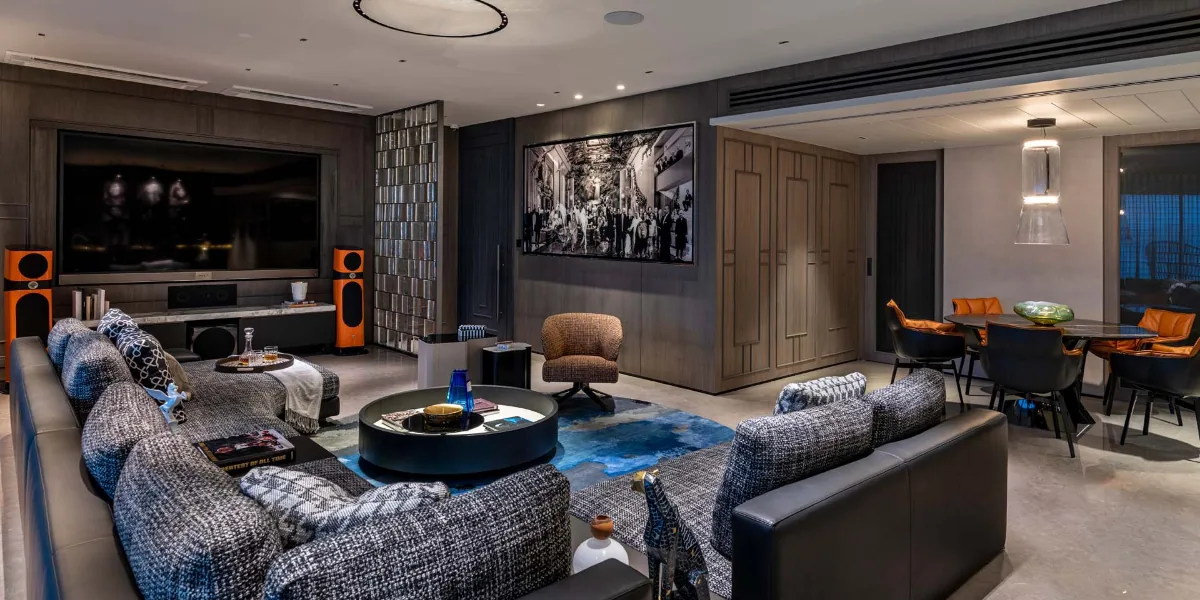
3. Split the House Into Zones You Can Open and Shut
Divide the bungalow into a small everyday wing and a larger guest wing, each with its own door, switches and cooling. On a quiet weekend you open one and leave the other asleep.
The everyday wing is where two people actually live: a bedroom, a bathroom, a sitting corner and easy access to the kitchen and the outdoors. It should work like a small flat. The guest wing holds the extra bedrooms, a bunk room if children come, and a corridor with a door at the end. The big living room belongs to both wings and opens onto the veranda or the lawn.
Doors matter more than walls
Folding or sliding doors between the living room and the guest corridor let the house shrink on a Sunday night. They also keep the stale air of unused rooms from drifting into the ones you’re using. Give each wing its own distribution board, so the guest side can be switched off at the mains when you leave.
Let one room do two jobs
A sofa that opens into a bed. A dining table that seats ten and still looks right with two. A media corner that disappears behind a sliding screen. Furniture that moves makes better sense than rooms that sit empty. For more on bungalow plans and styles, see bungalow house design.
FAQs: Plot, Layout and Zones
1. What is the best location for a weekend bungalow near Mumbai?
It depends on what you want from the weekend. Alibaug suits sea air and short breaks, Lonavala and Pawna suit the monsoon and the hills, Karjat suits rivers and greenery, and Goa suits longer stays. Visit the plot in July before you decide, because that’s when every weakness shows.
2. Should a weekend bungalow be single-storey or two-storey?
On a roomy plot, a single storey with two wings is easy to open, close and keep an eye on. On a tighter plot, two floors let you put the bedrooms above the damp ground and keep the footprint small. Neither is better in itself.
3. How big should a weekend bungalow be?
Big enough for the usual weekend, not the busiest one. Size the everyday wing for two to four people and let the guest wing take the rest. The plot, the local approvals and how often guests really come will settle the final size.
4. Has Sumessh Menon & Associates designed a second home?
Yes. Quantam is a Mumbai home conceived as a second home. It has an open-plan living and dining area, two guest bedrooms with different characters and an open deck with views of the skyline. The studio starts its villa work from the homeowner’s vision, lifestyle and aspirations.
4. Pick Finishes That Forgive Damp, Sand and a Closed House
Choose materials that shrug off moisture and need no polishing: stone, tile, brick, terrazzo and metals that won’t rust. Avoid anything that swells, peels or sulks when the air stays wet.
Start with the floor. Kadapa, honed local stone, matt tiles and terrazzo are all happy with wet feet and a closed house. Solid timber and engineered boards do badly at ground level in the monsoon. A glossy marble that’s lovely in a Worli apartment turns into a skating rink the moment someone walks in from the pool.
Walls, ceilings and joinery
Use plaster that can breathe, such as limewash or mineral paint, and tile the wet areas properly. Fit skirtings in stone or tile, because MDF swells at the base in the first August. Veneer peels when the board behind it is poor, so marine-grade plywood or solid wood is the safer choice for wardrobes and kitchen shutters. The WHO guidelines on indoor dampness and mould say the best way to avoid health harm is to stop dampness and mould from lingering on indoor surfaces and inside the building. A musty house is a health matter as well as a smell.
Metal, glass and fabric near the sea
Iron rusts fast near the sea. Look at marine-grade stainless steel, powder-coated aluminium and brass that’s allowed to age. Choose sofa covers you can take off and wash, outdoor-rated rugs and cotton that dries quickly. Keep leather and heavy velvet for the city flat.
Be ready to like a little patina. A weekend home that tries to look new all year will fight you all year.
5. Weekend Bungalow Design Needs Storage for Everything You Leave Behind
A weekend home needs more storage than a city flat, because everything that makes it comfortable stays there: bedding, towels, board games, beach gear and a second set of everything.
People forget this on the drawings. By the first Diwali the second bedroom has become a godown. Build in a linen cupboard, a store for cushions and spare mattresses, a shelf by the door for sandals and a proper corner for the garden things nobody takes back to Mumbai. One closed store near the veranda beats five open shelves, because the cushions need somewhere dry to go the moment the rain starts. For ideas on fitted cupboards, see wardrobe design.
Cupboards That Can Breathe
A sealed cupboard in a humid house is a mould incubator. Raise it a few centimetres off the floor, leave an air gap behind it and add louvred panels or vents at the top and bottom. Slatted shelves and cane doors let air pass. Skip fabric linings. A small dehumidifier on a timer in the main store does more than any number of moisture sachets.
Keep clothes in cotton bags rather than plastic, and wash everything before it goes in for a long absence. Damp likes a dirty shirt best.
FAQs: Finishes, Damp and Storage
1. Which flooring is best for a weekend home?
Stone and tile. Kadapa, honed local stone, matt porcelain and terrazzo cope with wet feet and closed windows. Solid timber on the ground floor is the one to avoid in a wet climate.
2. How do you stop a closed house from smelling musty?
Keep some air moving. Use vents or louvres that can stay open when the windows are shut, run a small dehumidifier on a timer, skip carpets and loose rugs, and ventilate every cupboard. A caretaker who opens the windows on dry days helps more than any gadget.
3. Can you use wooden furniture in a weekend home?
Yes, if it’s solid teak or another well-sealed hardwood. The trouble starts with cheap board furniture, which swells at the edges in the first monsoon.
4. What materials has Sumessh Menon & Associates used in bungalow interiors?
At the Calypso bungalow near Pawna Dam, the living room floor is Kadapa stone and brick, the dining room has printed tiles and the walls are textured white with archways. Quantam, a Mumbai home, uses marble underfoot instead, so the palette changes with the house.
6. Plan Bedrooms for a Crowd on Saturday and Two People on Sunday
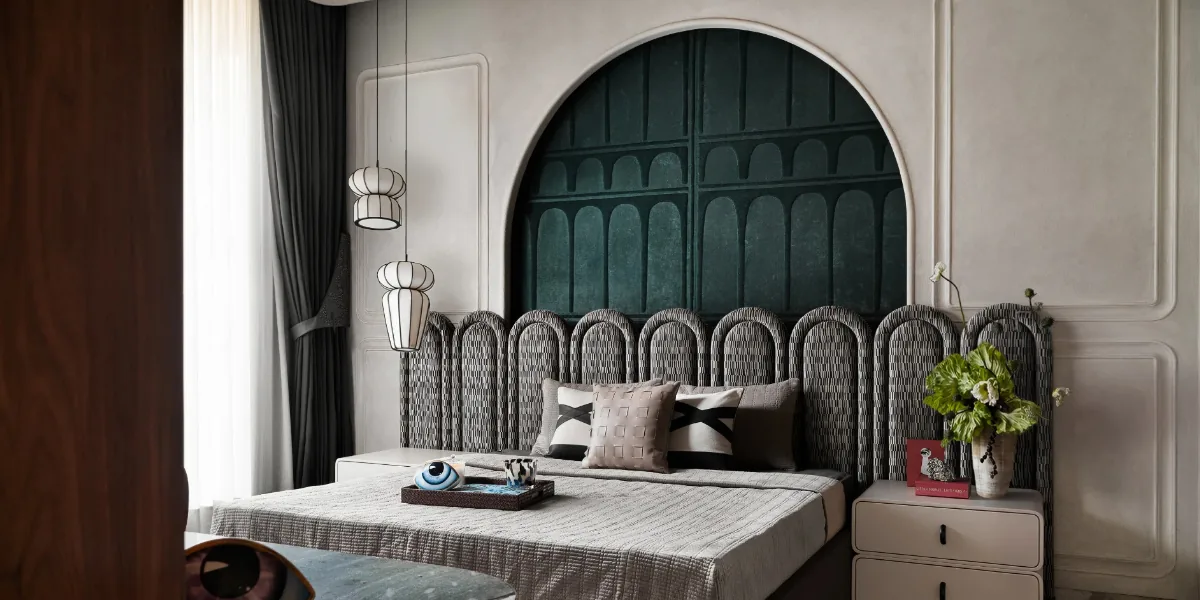
Build a few well-made bedrooms that can stretch, plus one room that sleeps children in bulk, instead of a row of identical rooms that sit empty most weekends.
Count the overnight guests across a normal year, not the biggest night. A main bedroom, two or three guest bedrooms with their own bathrooms and a bunk room cover most families. Twin beds that push together into a king suit couples and friends who take turns sharing a room.
Bunk rooms are worth the floor space
Children don’t want a room each. They want a room together. Built-in bunks with a reading light and a socket at every berth, hard floors and a bathroom next door take eight children off the living room floor and put them to bed.
Put the quiet room on the quiet side
A bedroom facing the pool deck won’t be peaceful at midnight. Give the main bedroom the calm side of the house and put the bunk room closest to the noise. Every extra bedroom is also another room to air, dust and wash linen for, and none of that happens when nobody’s there. If you doubt the sixth bedroom, put its floor area into a bigger veranda.
7. Give the Kitchen, the Staff and the Caretaker a Proper Place
A weekend bungalow depends on the people who keep it running, so plan a real room for the caretaker, a service entry and a kitchen that can feed fourteen without the cook crossing the living room.
From Monday to Friday, the caretaker is the real owner of the house.
The caretaker’s room needs its own entrance, a toilet, a window that looks towards the gate, somewhere to dry clothes and enough space for a family if that’s the arrangement. Put it on the service side near the gate, not behind the generator. A person who’s comfortable looks after a house better.
An open counter in front, a closed kitchen behind
The family likes a pretty, open kitchen. The cook needs a working one. A good compromise is a breakfast counter or pantry facing the living room, with the heavy cooking in a closed kitchen behind it, a chimney that vents outside and a second sink for the pots. Closed cupboards keep dust and insects out.
A service yard with its own way in
Add a yard with an outdoor tap, a washing line, a place for garden tools and a spot where a delivery can be left without anyone crossing the house.
FAQs: Bedrooms, Kitchens and Caretakers
1. How many bedrooms does a weekend bungalow need?
There’s no fixed number. Count the guests you really host across a year. Most families do well with a main bedroom, two or three guest rooms with their own bathrooms and a bunk room for the children.
2. Does a weekend home need a caretaker’s room?
Yes, if the house stands alone on its own plot. Someone has to open it, air it and watch it between visits, and a room with its own entrance and toilet makes that arrangement fair for everyone. A flat in a gated community may manage without one.
3. Should the kitchen in a weekend home be open or closed?
A bit of both. Keep a breakfast counter open to the living room for company, and do the heavy cooking in a closed kitchen with a chimney that vents outside.
4. How does Sumessh Menon & Associates plan bedrooms for a family with older children?
At the Serra Charis villa, the master floor has two full suites and the teenagers have personal suites of their own on the third floor. A second home can borrow the idea, with a guest wing and a bunk room kept apart from the main bedroom.
8. Make the Outdoors the Main Living Room
People buy a weekend home for the outdoors, so the veranda, deck and garden deserve as much thought as the living room, and they have to survive the rain.
The word bungalow comes from a Hindi term for a house in the Bengali style, and the classic version is a single storey with a sloping roof and a veranda that often wraps round it. Wide eaves and verandas give shade, which is why the form suits hot climates. A deep veranda is still the most useful room in the house. It shades the walls, keeps rain off open doors and gives the family somewhere to sit through a downpour. That’s half the reason people head to Lonavala in July.
Shade first, then seating
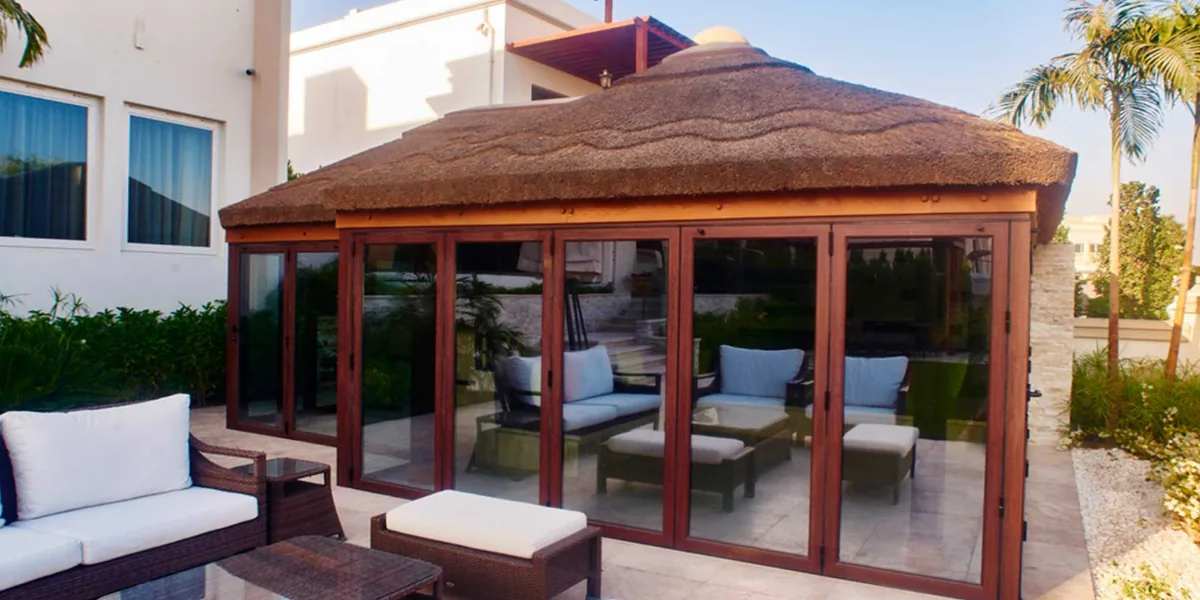
A tiled or thatched pavilion, a pergola with a proper roof and trees planted on day one will do more for comfort than another sofa. In March it’s the sun, not the rain, that sends people indoors. Big glass doors bring the garden in and the heat with it, so check how the light behaves before choosing them. Natural light in villa interiors goes through window placement, shading and heat, and penthouse terrace design covers shade, flooring and drainage ideas that carry over to a bungalow deck.
A pool is a pleasure and a chore
A pool looks wonderful on Saturday and needs filtering, cleaning and a person on Tuesday. If nobody’s there in the week, the water can turn green before the next weekend. A plunge pool, or a shallow one with a cover, is easier to live with. Give it a shaded edge and an outdoor shower so the sand and chlorine stay out of the house.
Lights, insects and furniture
Warm, low lights along the paths draw fewer insects than bright white ones near the seating. Insect screens on the veranda and the bedroom windows are non-negotiable around Karjat and Pawna. Outdoor furniture should be teak, aluminium or good synthetic rattan, with quick-dry cushions that live in a dry box when it rains.
9. Back Up Power, Water and Security Before You Choose Cushions
Plan for power cuts, dry taps and an empty house from the first day. That means a battery or inverter for the essentials, a generator on a proper base, water you can trust and security that doesn’t rely on one person.
In many coastal and hill pockets the power goes out in heavy rain, and the pump, the router and the freezer all stop together. Decide what must never stop, and wire those things on their own circuit.
Put these on a circuit a battery can carry:
- the water pump and its cut-off switch
- lights and fans in the everyday wing
- the fridge and the freezer
- the router and the cameras
Put the generator outside in a ventilated enclosure with a fuel store, and keep its noise away from the veranda. Rooftop solar with batteries is worth a look wherever the cuts run long.
Water is the other long worry
Many plots depend on a borewell or a tanker. An underground sump plus an overhead tank, a filter, a pump with a cut-off and a main valve you can shut when you leave will protect the house from shortages and from burst pipes alike. Rainwater harvesting suits a place that gets months of rain and then runs dry.
Security that doesn’t depend on one person
Shutters or grilles on the ground-floor windows, a strong main door, lights that come on with movement and cameras you can check from Mumbai make a quiet house hard to approach unseen. Keep valuables elsewhere and give the papers a small hidden safe. No design makes an empty house burglar-proof. It only makes the job slower and more visible.
FAQs: Outdoors, Power, Water and Security
1. Is a swimming pool a good idea in a weekend home?
Only if somebody will look after it. A pool needs filtering and cleaning all week, and it turns green quickly when nobody’s around. A plunge pool or a shallow pool with a cover is easier to live with.
2. How do you secure a weekend bungalow when it’s empty?
Use layers. A solid gate and boundary, shutters or grilles on ground-floor windows, motion lights, cameras you can check remotely and a caretaker who knows the routine. Keep the valuables at home in the city.
3. Does a weekend home need solar power or a generator?
Most need something. A battery or inverter can carry lights, fans, the router and the pump through short cuts, solar helps where cuts run long, and a generator covers the rest. Put the essentials on a separate circuit first.
4. Has Sumessh Menon & Associates designed homes with a pool and outdoor areas?
Yes. The studio’s luxury villa in Johannesburg is a duplex divided into outdoor spaces, indoor rooms, a pool area and a cosy pool house, and the project page calls it a holiday villa for a family.
10. How Sumessh Menon & Associates Approaches a Weekend Bungalow
Sumessh Menon & Associates is an architecture and interior design studio in Mumbai, with offices in Bandra West and Santacruz West. Its residential work covers apartments, duplexes, penthouses, sky villas, villas and bungalows, with a turnkey service.
At Sumessh Menon & Associates, villa work starts with the homeowner’s vision, lifestyle and aspirations, and a second home is no different. The Calypso bungalow near Pawna Dam has textured white walls and archways, Kadapa stone and brick underfoot in the living room, a garden with cobblestones and bougainvillea, and a basement with sunken seating and a white bar.
Quantam, a Mumbai home conceived as a second home, pairs an open-plan living and dining area with two guest bedrooms and an open deck. More of the studio’s villa work, in India and abroad, sits on the luxury villa interior design page.
Four questions worth settling in a weekend home brief:
Which wing stays open on a quiet weekend?
The answer shapes the doors, the switches and the cooling.
Where does the rain come from?
Eaves, verandas and window positions follow the weather as much as the view.
Who looks after the house on Tuesday?
A caretaker’s room and a service entry belong on the plan early.
What happens to the cupboards in August?
Materials and ventilation are picked for a closed, damp house.
Conclusion: A Weekend House That Looks After Itself
A good weekend bungalow isn’t the biggest house on the plot or the one with the longest pool. It’s the one that’s still pleasant when you walk in after five empty days: the air is fresh, the water runs, the lights come on and nothing has swollen or peeled.
Get the plot, the weather and the zones right first. Choose finishes that forgive. Look after the caretaker as carefully as the guests, and give the outdoors a roof. The cushions and the colours can wait.
Design the Tuesday, and Saturday takes care of itself.
Common FAQs: Weekend Bungalow Design
1. What is a weekend bungalow?
A second home, usually within reach of a city, used for weekends and short breaks rather than every day. The word bungalow comes from a Hindi term for a house in the Bengali style.
2. How is a weekend home different from a holiday home?
Mostly in how it’s used. A weekend home is visited often for short stays, so arriving, unpacking and shutting the house matter a great deal. A holiday home tends to be used in longer blocks, with more time to settle in.
3. What should you check before buying a plot for a weekend bungalow?
Clear ownership and land-use papers, the approach road in the rain, the water source, drainage, power supply and local building rules. Talk to the neighbours, take a lawyer along and see the plot in the monsoon.
4. Which colours suit a weekend bungalow?
Light, earthy ones that forgive sand and dust: warm whites, sand, clay and soft greens. Avoid pure white sofas and glossy dark floors that show every footprint.
5. Can you rent out a weekend bungalow when the family isn’t there?
Some owners do. If you might, plan a locked owner’s cupboard or room and tougher finishes from the start, and check the local rules before you advertise.
6. How do you stop a weekend home from feeling like a hotel?
Leave personal things in it: books, family photographs, a bit of local craft and a few old chairs. Warm lights and one properly comfortable corner do more than a perfect matching set.
7. Does Sumessh Menon & Associates design bungalows and villas outside Mumbai?
Yes. The portfolio includes projects in Mumbai, Goa, Bengaluru, Dubai, Galle in Sri Lanka and Johannesburg, along with the Calypso bungalow near Pawna Dam.
8. Can Sumessh Menon & Associates handle both architecture and interiors for a second home?
One team can. Sumessh Menon & Associates is an architecture and interior design studio and offers a turnkey service, so a second home can move from concept to furnishing without changing hands.